Definition:
Diablo is a Spanish noun that means devil. It refers to an evil supernatural being in religious contexts, but it is also commonly used in everyday Spanish as an exclamation, descriptive term, or expression of surprise, frustration, or emphasis depending on tone and situation.
If you have watched Spanish movies, listened to Latin music, played video games, or traveled to a Spanish speaking country, you have probably heard someone say “¡Diablo Meaning in Spanish: What It Really Means (2026)!” Sometimes it sounds dramatic. Other times it feels playful or even funny.
So what does diablo really mean in Spanish? Is it always religious? Is it rude? Can it be friendly or casual?This guide explains the meaning of diablo in Spanish from every angle. You will learn its literal definition, origin, modern usage, tone differences, examples, comparisons with similar words, polite alternatives, and cultural context so you know exactly how and when to use it.
What Does Diablo Mean in Spanish?
The word “what does diablo mean comes from the Spanish language and translates to “devil” in English. It is commonly used in movies, video games, music, and pop culture to describe something dark, powerful, or mysterious. One of the most famous uses of the term is in the popular Diablo game franchise, where it represents evil forces and supernatural themes.
Depending on the context, “Diablo” can refer to a fictional character, a nickname, or simply the Spanish word for the devil.
At its most basic level, diablo means devil.
It is a masculine noun and commonly appears as el diablo. The plural form is los diablos.
Literal Meaning
In religious, mythological, or literary contexts, el diablo refers to the devil, a supernatural being associated with evil, temptation, and opposition to good.
Example:
El diablo es una figura importante en muchas religiones.
(The devil is an important figure in many religions.)
Origin of the Word Diablo
The word diablo has ancient roots that explain why it is still widely used today.
| Language | Word | Meaning |
| Ancient Greek | diábolos | accuser or slanderer |
| Latin | diabolus | devil |
| Spanish | diablo | devil |
The original Greek term described someone who falsely accuses or causes division. Over time, it became associated with evil figures in religious traditions and entered Spanish through Latin.
Is Diablo a Bad Word in Spanish?
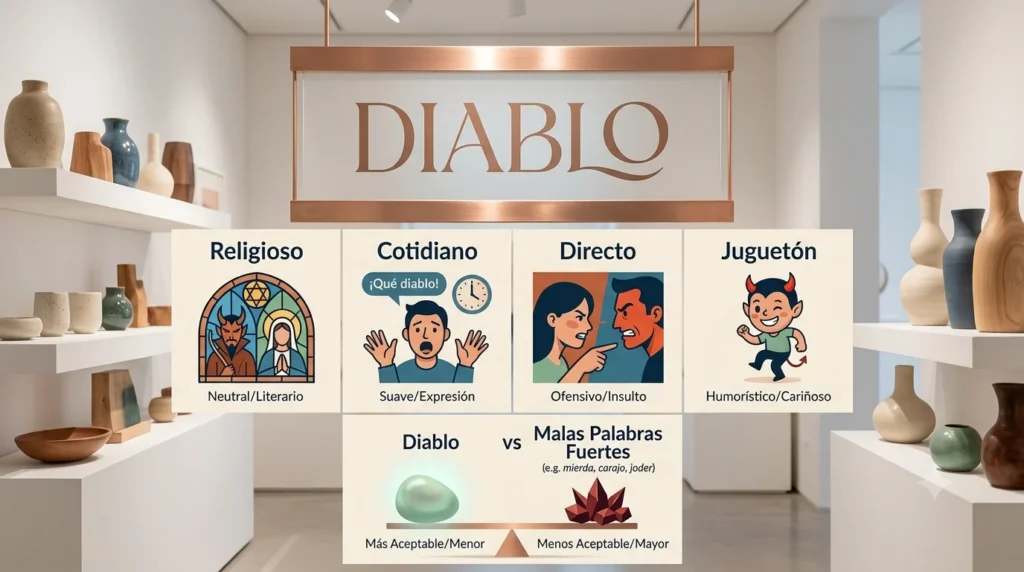
Not necessarily. Whether diablo is offensive depends on how it is used.
In religious discussions, it is neutral. As an everyday expression, it is usually mild. When directed at a person, it can be insulting. When used playfully, it is often humorous.
Compared to stronger Spanish curse words, diablo is generally considered softer and more socially acceptable.
What Does “El Diablo” Mean?
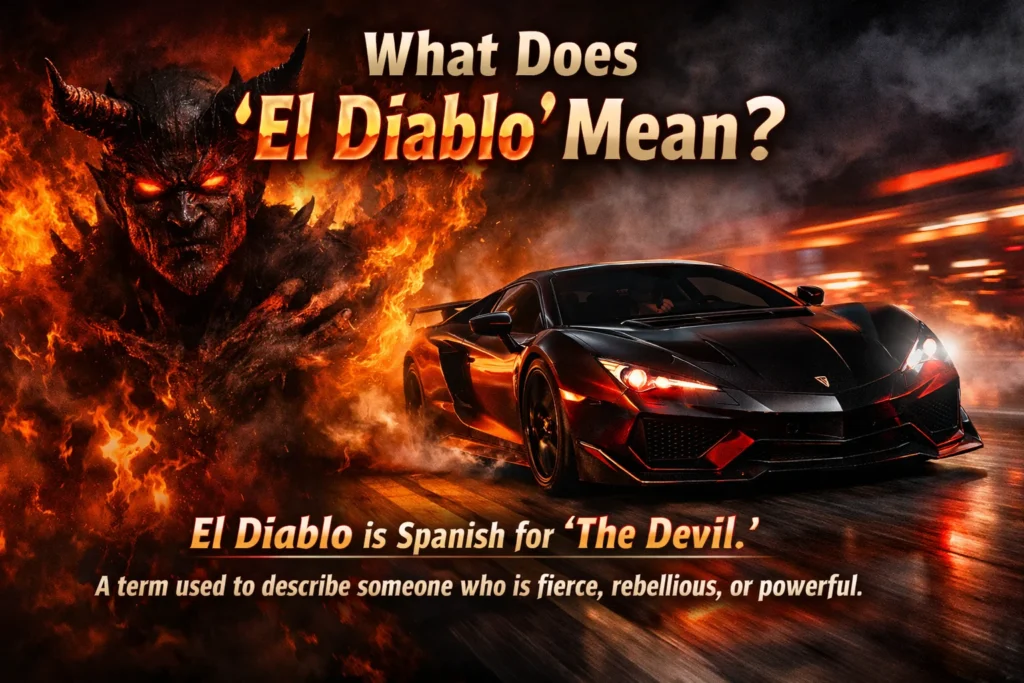
“El Diablo” is a Spanish phrase that translates to “The Devil” in English. The term is often used in movies, music, sports nicknames, and popular culture to describe someone who is fierce, rebellious, powerful, or intimidating.
In some contexts, it can refer to the devil in a religious sense, while in others it may simply be used as a dramatic or stylish nickname. Because of its strong and mysterious tone, “el diablo meaning” has become a popular phrase in entertainment, gaming, and social media conversations.
Everyday Uses of Diabl in Spanish
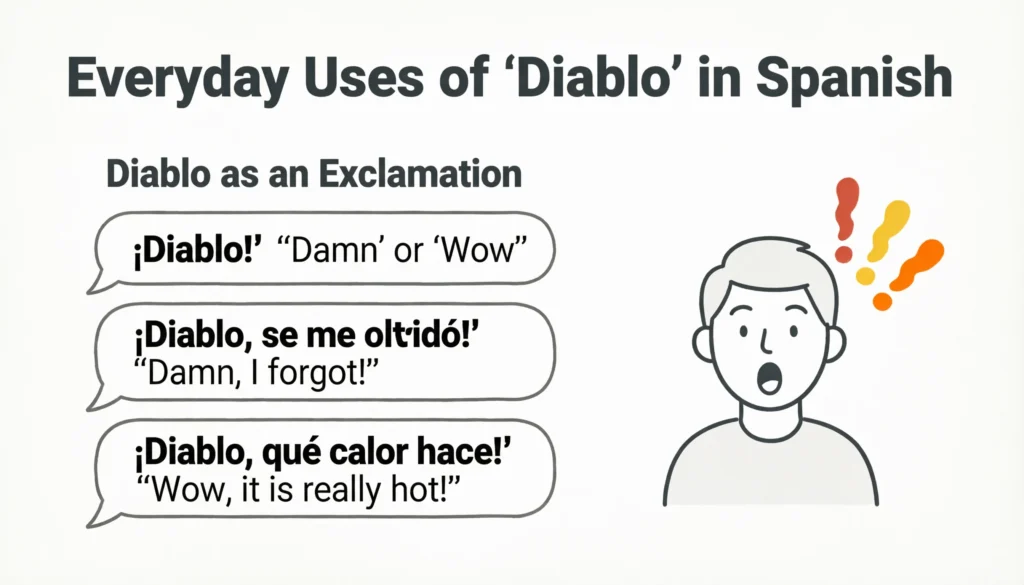
Diablo as an Exclamation
This is one of the most common uses in spoken Spanish.
Examples include surprise, frustration, or amazement.
¡Diablo!
(Damn or Wow)
¡Diablo, se me olvidó!
(Damn, I forgot)
¡Diablo, qué calor hace!
(Wow, it is really hot)
In these cases, the word functions more like an emotional reaction than an insult.
Diablo Used to Describe a Person

Calling someone diablo suggests they are mischievous, difficult, or troublemaking.
Ese niño es un diablo.
(That kid is a little devil)
No confíes en él, es un diablo.
(Don’t trust him, he is a devil)
When referring to children, the tone is often playful. When referring to adults, it can be negative.
Common Expressions With Diablo
Spanish includes many fixed phrases using the word diablo.
| Expression | Meaning | Tone |
| Qué diablos | What the heck | Frustrated |
| Mandar al diablo | To send someone away angrily | Negative |
| Qué diablos haces | What on earth are you doing | Annoyed |
| Más sabe el diablo por viejo | Wisdom comes with age | Proverb |
Example
| Sentence | Meaning | Tone |
| ¡Diablo, ganaste! | Wow, you won | Friendly |
| Ese tipo es un diablo | That guy is evil | Negative |
| Qué diablos pasó aquí | What the heck happened | Neutral |
| El diablo aparece en la Biblia | The devil appears in the Bible | Neutral |
Regional Usage Differences
The word diablo is understood across the Spanish speaking world, but its frequency varies.
In Mexico and Central America, it is commonly used as a mild exclamation. In the Caribbean, it is often dramatic or expressive.
Diablo Compared With Similar Spanish Words
Difference Diablo vs Demonio
| Word | Meaning | Usage |
| Diablo | Devil | Common and conversational |
| Demonio | Demon | More formal or literary |
Using Diablo vs Infierno
| Word | Meaning |
| Diablo | A being |
| Infierno | A place |
Comparing Diablo vs Maldición
| Word | Meaning | Strength |
| Diablo | Devil or damn | Mild |
| Maldición | Curse | Stronger |
Alternate Meanings and Cultural Use
The word diablo appears in video games, sports teams, movies, music, and brand names. In these contexts, it often represents power, rebellion, or intensity rather than literal evil.
Polite Alternatives to Diablo
In professional or formal situations, these alternatives are safer.
| Situation | Alternative | Meaning |
| Surprise | Vaya | Wow |
| Frustration | Caramba | Oh dear |
| Confusion | Qué pasa | What’s going on |
| Shock | Increíble | Incredible |
Can Diablo Be Used Playfully?
Yes. Among friends or family, diablo is often playful.
Eres un diablo, siempre bromeando.
(You are such a troublemaker)
¡Diablo, qué rápido corres!
(Wow, you run fast)
Tone and context matter more than the word itself.
FAQs
Does diablo literally mean devil?
Yes. Its direct translation is devil.
Is diablo considered a swear word?
It is mild and often acceptable in casual conversation.
Can children say diablo?
In many regions, yes, though some parents discourage it.
Is saying “¡Diablo!” rude?
Usually no, unless directed angrily at someone.
What is the plural of diablo?
The plural form is diablos.
What is the difference between diablo and demonio?
Diablo is more common and conversational. Demonio sounds more formal.
Is diablo used in religion?
Yes, especially in Christian contexts.
Can diablo have a positive meaning?
It can express amazement or playful teasing
Conclusion
The word diablo is one of the most versatile expressions in Spanish. While it literally means devil, its everyday use ranges from surprise and frustration to humor and exaggeration.
When used carefully and with the right tone, diablo can make your Spanish sound more natural and expressive. Understanding context is the key to using it correctly and confidently.
Discover More Related Articles:
- What Does Melanoma Look Like | Signs, Symptoms & Early Detection In 2026
- What Does Poison Ivy Look Like: Symptoms, Stages & Pictures In 2026
- What Does a Cavity Look Like | Signs, Stages, Causes & Treatment In 2026

Ryan Thompson is an experienced content writer specializing in slang terms, texting abbreviations, and word meanings. He writes for meanvoro.com, where he creates accurate and easy-to-understand language content for readers.