

Lamentation in the Bible refers to a heartfelt expression of grief, sorrow, repentance, or distress directed toward God, often mixed with prayer, confession, and hope for restoration.
Lamentation is one of the most emotionally rich and spiritually honest concepts in the Bible. It captures the raw language of grief, sorrow, repentance, and deep longing spoken directly to God.
Far from being a sign of weak faith, biblical lamentation is often portrayed as an act of courage, trust, and spiritual intimacy.
If you’ve ever wondered what does lamentation mean in the Bible, why it appears so often in Scripture, or how it differs from ordinary complaining, this guide walks you through the meaning, origin, tone, examples, and real-life application of biblical lamentation in a clear, friendly, and practical way.
Biblical lamentation allows believers to bring pain honestly before God while still trusting His character and promises.
What Is Lamentation in the Bible?

In biblical terms, lamentation is not simply sadness or emotional outpouring. It is a structured, intentional response to suffering, loss, injustice, or divine discipline spoken directly to God.
Lamentation often includes:
- Mourning over sin or suffering
- Crying out to God for help
- Acknowledging God’s justice or sovereignty
- Asking for restoration or mercy
- Ending with renewed hope or trust
This pattern appears repeatedly in Scripture, especially in the Psalms and the Book of Lamentations.
The Origin of Lamentation in the Bible
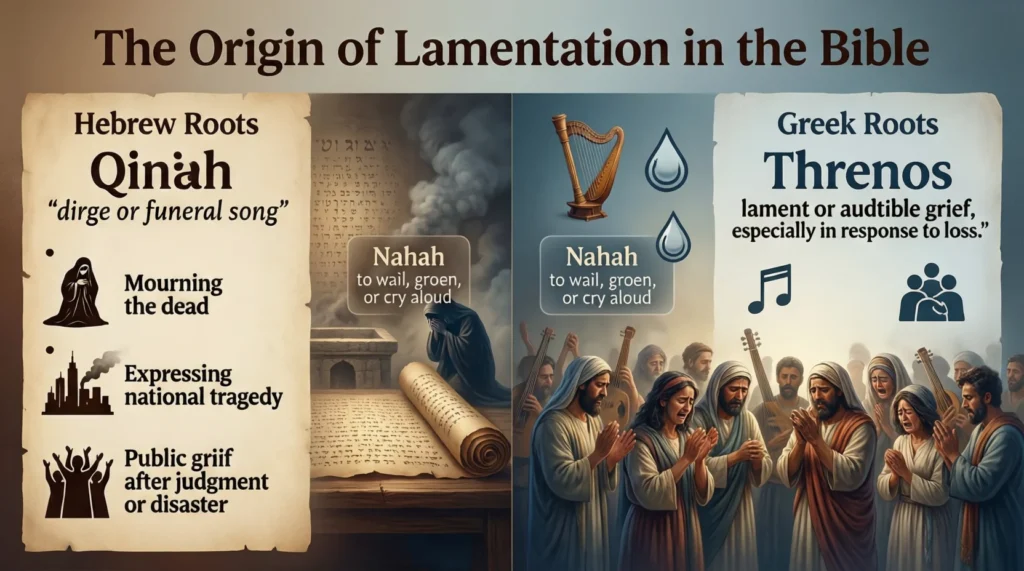
Hebrew Roots
The primary Hebrew word associated with lamentation is “qinah”, meaning a dirge or funeral song. It was commonly used for:
- Mourning the dead
- Expressing national tragedy
- Public grief after judgment or disaster
Another related Hebrew term is “nahah,” meaning to wail, groan, or cry aloud.
Greek Roots
In the New Testament, the Greek word “threnos” is used, meaning lament or audible grief, especially in response to loss.
These words show that lamentation was not hidden or private it was expressed openly, often in community settings.
The Book of Lamentations: A Biblical Centerpiece
The clearest example of lamentation in the Bible is the Book of Lamentations, traditionally attributed to the prophet Jeremiah.
Why Was Lamentations Written?
- To mourn the destruction of Jerusalem
- To grieve the exile of God’s people
- To acknowledge sin and divine judgment
- To cling to hope in God’s mercy
Despite its sorrowful tone, the book includes one of the Bible’s most hopeful declarations:
“Because of the Lord’s great love we are not consumed, for his compassions never fail.” (Lamentations 3:22)
This shows that lamentation in the Bible is never hopeless it is grief anchored in faith.
How Lamentation Is Used Throughout Scripture
Lamentation appears in many forms across the Bible:
1. Personal Lament
Individuals cry out to God during personal suffering.
- David lamenting betrayal or illness
- Job lamenting loss and confusion
- Hannah lamenting infertility
2. Communal or National Lament
Entire communities express grief together.
- Israel mourning defeat or exile
- Public fasting and prayer after disaster
- Prophetic calls to repentance
3. Prophetic Lament
Prophets lament over sin and coming judgment.
- Jeremiah weeping for Judah
- Ezekiel lamenting Jerusalem’s fall
Lamentation vs Complaining: What’s the Difference?
A common misunderstanding is that lamentation equals complaining. Biblically, they are very different.
Key Differences
| Aspect | Lamentation | Complaining |
|---|---|---|
| Direction | Spoken to God | Spoken about God or others |
| Tone | Honest, reverent | Bitter, resentful |
| Faith | Rooted in trust | Often faithless |
| Outcome | Leads to hope | Leads to division or despair |
Lamentation invites God into pain; complaining pushes Him away.
Tone of Lamentation in the Bible
Lamentation can carry different tones depending on context:
Sorrowful and Broken
- Expressing grief after loss
- Crying out in despair
Repentant and Humble
- Acknowledging sin
- Asking for forgiveness
Hopeful and Trusting
- Remembering God’s faithfulness
- Expecting restoration
Biblical lamentation is emotionally honest but spiritually grounded.
Examples of Lamentation in the Bible
Friendly / Relatable Example
“How long, Lord? Will you forget me forever?” (Psalm 13:1)
This shows a deeply personal, honest conversation with God raw but faithful.
Neutral / Reflective Example
“My soul is downcast within me; therefore I will remember you.” (Psalm 42:6)
Grief is acknowledged, but hope remains.
Strong or Intense Example
“I am the man who has seen affliction by the rod of the Lord’s wrath.” (Lamentations 3:1)
Even intense lamentation is directed toward God, not away from Him.
Example
| Type of Lament | Biblical Example | Purpose |
| Personal | Psalm 22 | Cry for deliverance |
| National | Lamentations 1 | Mourning destruction |
| Repentant | Daniel 9 | Confession of sin |
| Prophetic | Jeremiah 9 | Warning and grief |
Real-World Usage of Lamentation
In Worship and Prayer
Many churches incorporate lamentation through:
- Psalms of lament
- Prayers during tragedy
- Seasons like Lent
In Christian Counseling
Lamentation helps believers:
- Process grief honestly
- Avoid suppressing emotions
- Bring pain to God safely
In Everyday Faith
Modern believers lament when facing:
- Loss of loved ones
- Injustice or suffering
- Personal failure or doubt
Is Lamentation Still Relevant Today?
Absolutely. Lamentation teaches that:
- Faith allows space for grief
- God welcomes honest prayer
- Hope can coexist with sorrow
Ignoring lament can lead to shallow spirituality. Embracing it leads to deeper trust.
Related Biblical Terms Compared
Difference Lamentation vs Mourning
- Mourning is emotional grief
- Lamentation is grief expressed to God
Compare Lamentation vs Repentance
- Repentance focuses on turning from sin
- Lamentation may include repentance but also includes sorrow, loss, and prayer
Using Lamentation vs Praise
- Lamentation often leads to praise
- Many Psalms begin with lament and end with worship
Alternate Meanings of Lamentation
Outside the Bible, lamentation can simply mean:
- A passionate expression of sorrow
- Public mourning or complaint
However, biblical lamentation is unique because it is relational, not merely emotional.
Polite or Professional Alternatives
In modern writing or speech, alternatives to the word “lamentation” may include:
- Expression of sorrow
- Prayerful reflection
- Mourning with hope
- Faith-based grieving
These phrases work well in sermons, essays, or professional faith-based writing.
FAQs
1. Is lamentation a sin in the Bible?
No. When directed toward God in faith, lamentation is encouraged.
2. Why did God allow lamentation in Scripture?
To show that honest faith includes sorrow, not just joy.
3. Is the Book of Lamentations only about sadness?
No. It also emphasizes God’s mercy, justice, and faithfulness.
4. Can Christians lament today?
Yes. Biblical lamentation is still a healthy spiritual practice.
5. Did Jesus ever lament?
Yes. Jesus wept over Jerusalem and at Lazarus’s tomb.
6. What Psalms are laments?
Psalms 13, 22, 42, and 88 are well-known laments.
7. How is lamentation different from despair?
Lamentation includes hope; despair does not.
8. How can I practice lamentation biblically?
By praying honestly, acknowledging pain, and trusting God’s promises.
Conclusion:
Lamentation in the Bible teaches us that faith is not about pretending everything is fine. It is about bringing every emotion especially pain into God’s presence.
Biblical lamentation:
- Honors honesty before God
- Deepens spiritual maturity
- Leads sorrow toward hope
Rather than weakening faith, lamentation strengthens it by anchoring grief in trust.
Discover More Related Articles:
- IDTS Mean in Text | TikTok, Snapchat, Instagram In 2026
- What Does Surreal Mean | Art & Literature In 2026

Ryan Thompson is an experienced content writer specializing in slang terms, texting abbreviations, and word meanings. He writes for meanvoro.com, where he creates accurate and easy-to-understand language content for readers.