
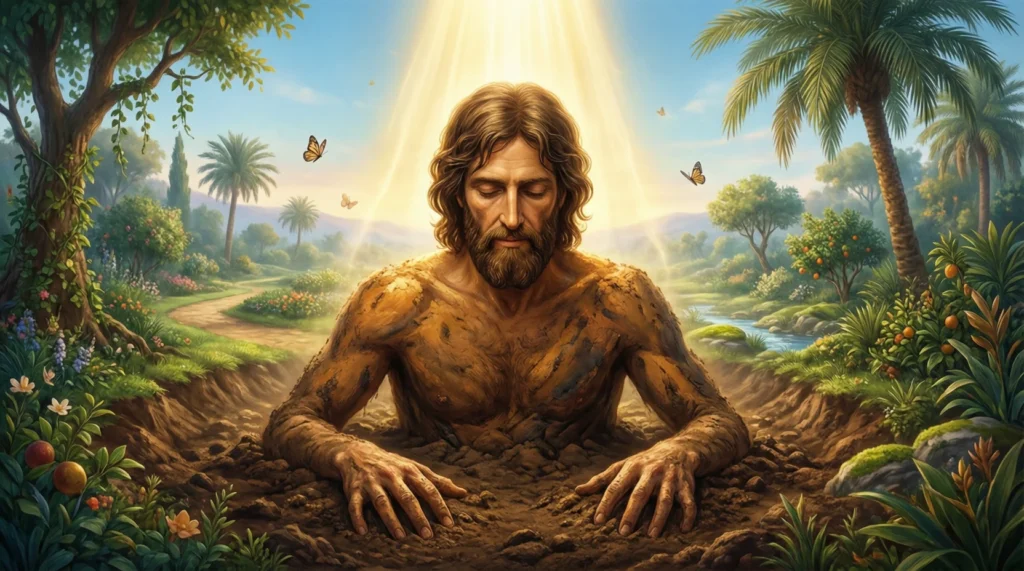
In the Bible, Adam means “man” or “humanity” and comes from the Hebrew word אָדָם (’āḏām), closely related to adamah, meaning “ground” or “earth.” Adam represents both the first human created by God and humanity as a whole.
Few names in the Bible carry as much weight as Adam. He is not only the first person mentioned by name but also the figure through whom the Bible introduces human identity, responsibility, and moral choice. Adam’s story explains where humans come from, why the world is broken, and how God relates to humanity.
Understanding what Adam means in the Bible goes far beyond a simple name definition. It touches on themes like creation, sin, redemption, and hope ideas that echo throughout both the Old and New Testaments.
What does Adam mean in the Bible?
The name Adam sits at the very foundation of biblical theology, human identity, and the story of creation itself. Whether you’re reading Genesis for the first time, studying theology, or researching biblical names, understanding Adam opens the door to some of Scripture’s deepest ideas about humanity, purpose, and relationship with God.
The Origin of the Name Adam in the Bible

Hebrew Roots and Meaning
The name Adam comes from the Hebrew word:
- אָדָם (’āḏām) – meaning man, human, or mankind
- Closely linked to אֲדָמָה (adamah) – meaning ground, soil, or earth
This connection is intentional. Genesis 2:7 states that God formed man from the dust of the ground, highlighting humanity’s earthly origin.
Biblical Wordplay
The Bible uses wordplay to reinforce meaning:
- Adam comes from adamah (ground)
- Humans are earthly yet divinely animated
- Life is sustained by God’s breath, not merely physical form
This linguistic link reminds readers that humans are both humble in origin and exalted in purpose.
Adam in the Creation Story (Genesis)
Adam as the First Human
According to Genesis 1–2:
- Adam is the first human created by God
- Made in the image and likeness of God
- Given authority to steward creation
- Placed in the Garden of Eden to work and care for it
Adam’s role establishes the biblical view of humanity as purposeful, relational, and morally accountable.
Adam and Eve: Humanity Together
Although Adam is created first, Eve is formed as his companion. Together they represent:
- Human partnership
- Community and relationship
- Shared responsibility before God
This reinforces that Adam’s meaning extends beyond one individual to all humanity.
What Adam Symbolizes in the Bible
Adam is both a historical figure and a theological symbol.
Key Symbolic Meanings of Adam
- Humanity as a whole – Adam often represents all people
- Human weakness – the capacity to choose wrongly
- Moral responsibility – humans are accountable to God
- Connection to the earth – created beings, not divine
In Hebrew usage, adam is sometimes used generically to mean “people” rather than a proper name.
Adam and the Fall of Man
The Choice That Changed Everything
Genesis 3 records Adam’s disobedience:
- Adam and Eve eat from the forbidden tree
- Sin enters the human experience
- Separation from God follows
This moment is often called “the Fall.”
Theological Significance
Adam’s sin introduces:
- Mortality
- Suffering
- Broken relationship with God
- The need for redemption
In biblical theology, Adam becomes the representative head of humanity.
Adam in the New Testament
Adam and Jesus: A Powerful Comparison
The New Testament frequently contrasts Adam with Jesus Christ.
Key Comparison
- Adam brought sin and death
- Jesus brings righteousness and life
Romans 5:12–19 and 1 Corinthians 15:45 describe Jesus as the “last Adam” or “second Adam.”
What This Means
- Adam represents fallen humanity
- Jesus represents redeemed humanity
- Through Christ, what was lost in Adam is restored
This comparison elevates Adam’s importance in understanding salvation.
Popularity and Real-World Usage of the Name Adam
Adam as a Personal Name
Adam remains a popular name across cultures and religions:
- Used in Judaism, Christianity, and Islam
- Common in Western and Middle Eastern societies
- Recognized globally
Why the Name Endures
- Simple and strong
- Deep biblical roots
- Represents humanity and humility
- Easy pronunciation across languages
Tone and Contextual Examples of “Adam”
Although Adam is primarily a biblical name, it can be used in different tones depending on context.
Friendly or Neutral Examples
- “Adam represents humanity’s beginning in the Bible.”
- “The story of Adam teaches important lessons about obedience.”
- “Adam is often used to describe mankind in Scripture.”
Academic or Theological Tone
- “Adam functions as a theological archetype of humanity.”
- “Paul contrasts Adam and Christ to explain salvation history.”
Symbolic or Reflective Tone
- “In Adam, we see both our origin and our brokenness.”
- “Adam’s story mirrors humanity’s struggle with choice.”
Example
| Context | Meaning of Adam | Explanation |
|---|---|---|
| Linguistic | Man / Human | Generic term for humanity |
| Creation | First human | God’s initial act of human creation |
| Symbolic | Humanity | Represents all people |
| Theological | Federal head | Humanity’s representative |
| Comparative | Contrast with Christ | Adam vs. the “last Adam” |
Comparison with Related Biblical Terms
Difference Adam vs. Humanity (Mankind)
| Term | Meaning | Difference |
|---|---|---|
| Adam | First human / humanity | Personal and symbolic |
| Mankind | All humans | Collective term |
Using Adam vs. Eve
- Adam: formed from the ground
- Eve: formed from Adam
- Both share responsibility and consequence
Compare Adam vs. Jesus (Second Adam)
| Adam | Jesus |
|---|---|
| Brought sin | Brought salvation |
| Disobedience | Obedience |
| Death | Eternal life |
Alternate Meanings of Adam
While primarily biblical, Adam has a few additional meanings:
- General term for humanity in Hebrew literature
- Symbol of humility due to earthly origin
- Cultural name meaning “man” or “person”
Outside the Bible, Adam does not typically carry negative meanings but is deeply tied to religious identity.
Polite and Professional Alternatives in Writing
When writing academically or professionally, alternatives to “Adam” may be useful:
- “The first human”
- “Early humanity”
- “The biblical progenitor”
- “Humanity’s representative”
These options maintain clarity without repetition.
FAQs
1. What does the name Adam mean in the Bible?
Adam means “man” or “human” and is connected to the Hebrew word for ground or earth.
2. Was Adam a real person or just a symbol?
The Bible presents Adam as a real person, but he also represents humanity as a whole.
3. Why is Adam important in Christian teaching?
Adam’s story explains the origin of sin and the need for salvation, which is fulfilled through Jesus Christ.
4. What language is the name Adam from?
The name Adam comes from Hebrew.
5. Does the name Adam mean dirt or earth?
Yes, indirectly. Adam is linked to adamah, which means ground or soil.
6. Is Adam mentioned in parts of the Bible other than Genesis?
Yes. Adam is mentioned in genealogies, Psalms, Romans, and 1 Corinthians.
7. Why is Jesus called the “second Adam”?
Because Jesus reverses the consequences of Adam’s disobedience through his obedience and brings salvation.
8. Is Adam still a common name today?
Yes. Adam is widely used around the world because of its simplicity and biblical roots.
Conclusion:
Understanding what Adam means in the Bible helps readers grasp the Bible’s message about human identity, responsibility, and hope. Adam represents where humanity began, what went wrong, and why redemption is necessary.
From his name’s earthly origin to his theological role as humanity’s representative, Adam’s story continues to shape biblical thought. Most importantly, Adam’s narrative prepares the way for the message of restoration and renewal found throughout Scripture.
Discover More Related Articles:

Ryan Thompson is an experienced content writer specializing in slang terms, texting abbreviations, and word meanings. He writes for meanvoro.com, where he creates accurate and easy-to-understand language content for readers.