

Piety in the Bible refers to sincere devotion to God expressed through reverence, obedience, humility, and righteous living, not outward religious performance.
Piety is one of those Bible words that sounds ancient, heavy, and slightly intimidating, yet it shows up right in the middle of everyday faith and spiritual life. Many people hear it and think of extreme religious behavior or forced holiness. The Bible paints a much richer, more balanced picture.
This guide breaks down what piety means in the Bible, how it was understood in biblical times, how it’s used today, and how it applies to real Christian living.
Whether you are studying Scripture, writing faith-based content, or simply trying to understand biblical language more clearly, this article gives you a complete and practical explanation.
Understanding Piety in the Bible
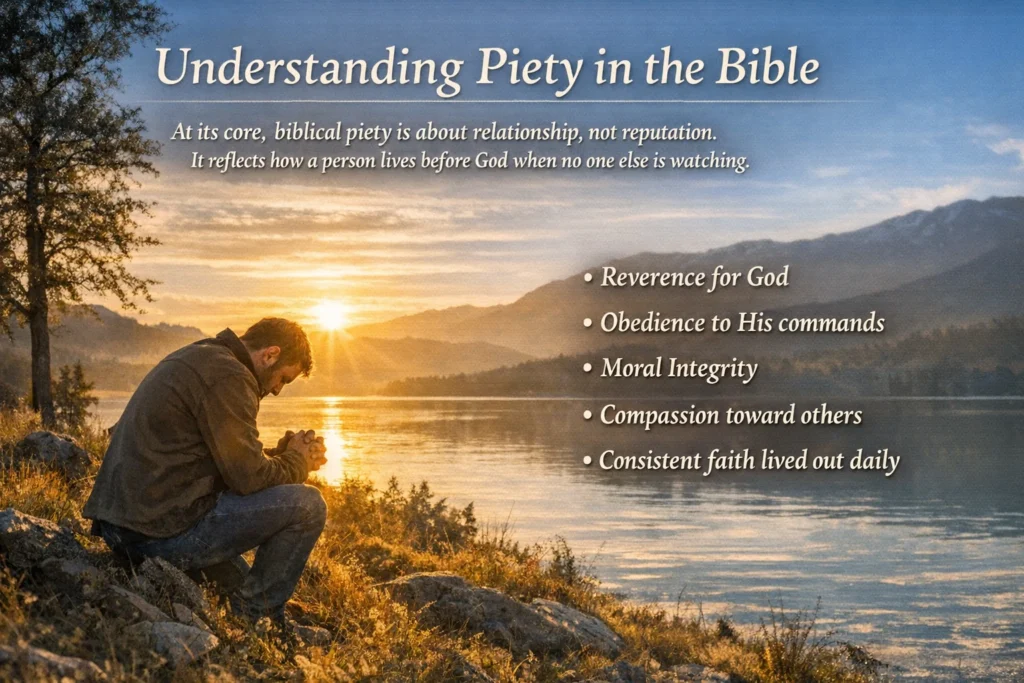
At its core, biblical piety is about relationship, not reputation. It reflects how a person lives before God when no one else is watching.
In Scripture, piety includes:
- Reverence for God
- Obedience to His commands
- Moral integrity
- Compassion toward others
- Consistent faith lived out daily
Unlike modern assumptions, piety in the Bible is not about looking religious or sounding spiritual. It is about aligning one’s heart, actions, and character with God’s will.
Origin of the Word “Piety”
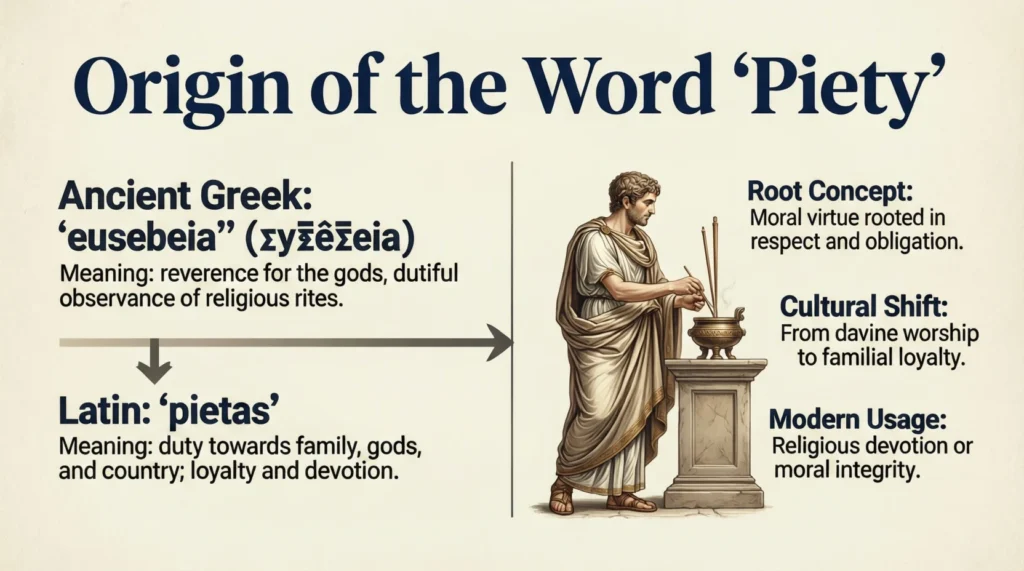
Linguistic Roots
The English word piety comes from:
- Latin: pietas (duty, devotion, loyalty)
- Greek equivalents in the Bible: eusebeia (godliness, reverent devotion)
- Hebrew concepts: yirah (fear or reverence of God), chesed (faithful love)
In biblical languages, piety carried the idea of faithfulness in relationship, both toward God and toward others.
Piety in the Old Testament
In the Old Testament, piety is closely connected with the fear of the Lord, which does not mean terror, but deep respect and awe.
Key Characteristics of Old Testament Piety
- Trusting God completely
- Obeying God’s law
- Acting justly and compassionately
- Living with humility
Biblical Examples
- Job is described as upright and God-fearing, a model of genuine piety.
- David shows piety through repentance, worship, and reliance on God.
- The Psalms frequently link piety with prayer, obedience, and reverence.
Old Testament piety focuses more on faithful living than flawless behavior.
Piety in the New Testament
The New Testament refines the meaning of piety further. Jesus and the apostles repeatedly warn against fake or performative piety.
Jesus on Piety
Jesus criticizes religious leaders who:
- Pray to be seen by others
- Give charity for public praise
- Follow rules without love or mercy
He teaches that true piety is:
- Quiet
- Humble
- Motivated by love for God
Apostolic Teaching
Paul frequently uses the word godliness, which is closely related to piety.
Biblical piety in the New Testament emphasizes:
- Inner transformation
- Christ-like character
- Faith expressed through love
What Piety Is and What It Is Not
What Biblical Piety Is
- Sincere devotion to God
- Obedient faith
- Moral consistency
- Reverent worship
- Compassionate action
What Biblical Piety Is Not
- Religious pride
- Public performance
- Legalism
- Self-righteousness
- Judgmental behavior
The Bible consistently teaches that piety without love is empty.
How Piety Is Used in Real Life
Today, the word piety is still used, but mostly in religious, academic, or moral discussions. Outside of faith contexts, it can sometimes sound formal or outdated.
Modern Usage Examples
- Theology discussions
- Sermons and devotionals
- Christian writing and teaching
- Ethical or moral debates
Sometimes the word is used positively, and sometimes critically, depending on tone.
Examples of “Piety” in Context
Friendly or Positive Tone
- “Her piety is shown through kindness and humility.”
- “Biblical piety grows from love, not obligation.”
Neutral or Academic Tone
- “The letter emphasizes piety as practical godliness.”
- “Early Christians associated piety with daily obedience.”
Negative or Dismissive Tone
- “His piety felt more like a performance than faith.”
- “Jesus warned against public displays of piety.”
Tone matters a lot. In Scripture, true piety is inward, while false piety seeks attention.
Table: Biblical Piety vs False Piety
| Aspect | True Biblical Piety | False or Hypocritical Piety |
|---|---|---|
| Motivation | Love for God | Desire for praise |
| Focus | Heart and obedience | Appearance and ritual |
| Behavior | Humble and consistent | Public and exaggerated |
| Result | Spiritual growth | Spiritual emptiness |
| Biblical Response | Approved by God | Condemned by Jesus |
Piety Compared With Related Biblical Terms
Piety vs Godliness
- Piety emphasizes reverence and devotion
- Godliness emphasizes Christ-like living
They are closely related and often overlap.
Piety vs Righteousness
- Righteousness refers to right standing with God
- Piety refers to daily devotion and reverence
Piety vs Holiness
- Holiness is being set apart for God
- Piety is how that holiness is lived out daily
Alternate Meanings of Piety
Outside the Bible, piety can also mean:
- Dutiful behavior toward family or country
- Moral seriousness or strictness
- Excessive or insincere religiosity (negative sense)
The Bible mainly uses piety in the positive, sincere sense.
Polite or Professional Alternatives to “Piety”
In modern Christian writing or conversation, these words are often used instead:
- Godliness
- Devotion
- Faithfulness
- Reverent living
- Spiritual integrity
These alternatives sound more natural in everyday language while preserving biblical meaning.
How to Practice Biblical Piety Today
Biblical piety is practical and lived out daily.
Practical Expressions of Piety
- Consistent prayer
- Honest behavior
- Serving others quietly
- Obedience to God’s Word
- Humility in success and failure
Piety is not about perfection. It is about direction and devotion.
Common Misunderstandings About Piety
Many people misunderstand piety because of cultural or religious misuse of the term.
Common Myths
- Piety means being overly strict
- Piety means avoiding joy
- Piety equals religious pride
- Piety requires public recognition
The Bible challenges all of these ideas and redirects piety toward authentic faith.
FAQs
1. What is the biblical definition of piety?
Piety in the Bible means sincere devotion to God shown through reverence, obedience, and righteous living.
2. Is piety the same as being religious?
No. Piety focuses on genuine faith, not religious performance.
3. Does Jesus support piety?
Yes, but He strongly condemns fake or showy piety.
4. Is piety mentioned directly in the Bible?
The concept appears frequently, often translated as godliness or reverence.
5. Can piety be negative?
Yes, when it becomes hypocritical or prideful.
6. How can Christians practice piety today?
Through humble obedience, prayer, compassion, and integrity.
7. Is piety outdated in modern Christianity?
No. Its expression may change, but its meaning remains essential.
8. What is the opposite of biblical piety?
Hypocrisy, pride, and empty religious behavior.
Conclusion
So, what does piety mean in the Bible? It means living a life of sincere devotion to God that flows from the heart into daily actions. It is not about impressing others or following rules for show. It is about reverence, obedience, humility, and love lived out consistently.
Biblical piety remains one of the clearest markers of authentic faith. When practiced rightly, it produces peace, integrity, and spiritual maturity, qualities that never go out of date.
Discover More Related Articles:
- JOI Mean in Porn | Understanding the Adult Content Slang Term In 2026
- The Root Tele Mean in Television | Understanding the Word’s Origin In 2026
- Closed Circle Mean in Math |The Symbol Most Students Misunderstand In 2026

Madison Taylor is an experienced content writer who focuses on researching and explaining word meanings, slang, and texting terms. She writes for meanvoro.com, creating clear and accurate to help readers understand language easily.