Definition
An upside down cross (often typed as “☦️,” “⛧,” or described as an inverted cross) in text usually carries symbolic meaning rather than literal religious intent. It can represent rebellion, irony, shock value, dark humor, or alternative beliefs, depending on context.
Scrolling through social media, you might notice people dropping symbols like “☦️” or referencing an upside down cross in captions, bios, or messages. At first glance, it can feel confusing—or even controversial.
But here’s the truth: the meaning isn’t always what you think.
In texting and online culture, symbols often evolve far beyond their original meaning. The upside down cross is a perfect example—it can be serious, ironic, edgy, or even completely harmless depending on how it’s used.
Let’s break it down clearly so you know exactly what it means, when it’s used, and how to interpret it correctly.
Origin of the Upside Down Cross Symbol
Historical and Religious Meaning
The upside down cross actually has a deeply rooted historical meaning:
- It is known as the Cross of Saint Peter
- According to Christian tradition, Saint Peter requested to be crucified upside down because he felt unworthy to die the same way as Jesus
- In this context, the symbol represents:
- Humility
- Faith
- Sacrifice
👉 So originally, it’s not negative at all.
Modern Cultural Shift
Over time, especially in pop culture and media, the symbol took on new meanings:
- Associated with rebellion against religion
- Used in horror movies and gothic aesthetics
- Linked with shock value or edgy expression
Because of this shift, many people now interpret it differently depending on context.
What Does an Upside Down Cross Mean in Text Today?
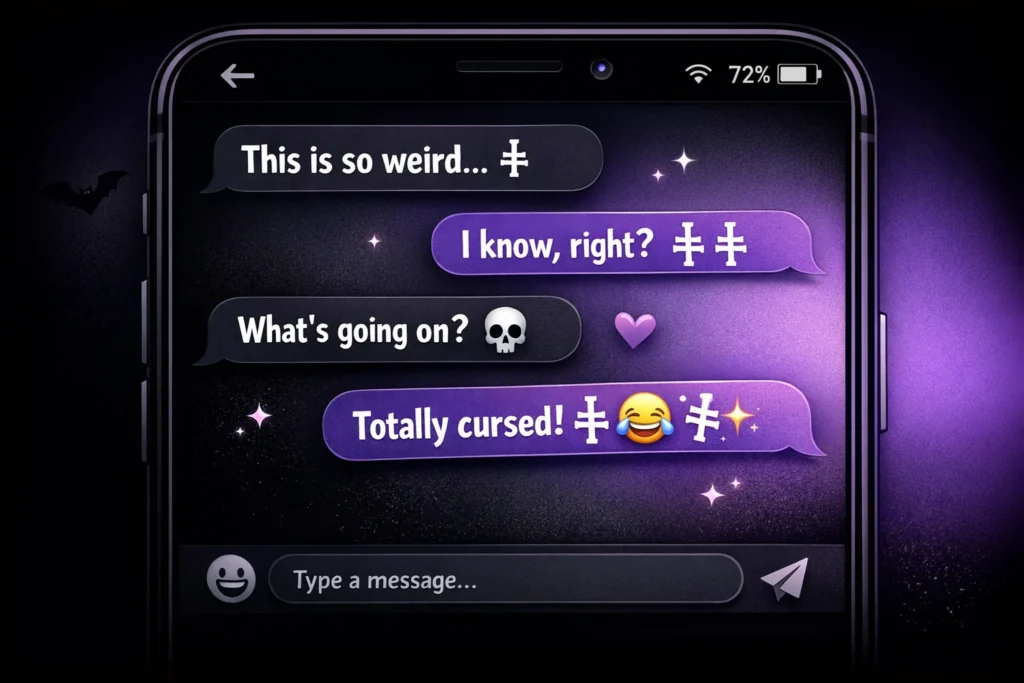
In modern texting and online communication, the upside down cross can mean several things:
1. Edgy or Aesthetic Expression
- Used in bios, usernames, or captions
- Common in goth, emo, or alternative styles
Example:
“Feeling different today ☦️”
👉 Tone: Neutral / aesthetic
2. Rebellion or Anti-Authority Vibe
- Symbolizes going against norms or beliefs
- Not always serious—sometimes just dramatic flair
Example:
“Rules? Nah ☦️”
👉 Tone: Playful rebellion
3. Dark Humor or Irony
- Used jokingly in memes or exaggerated situations
Example:
“When Monday hits again ☦️😂”
👉 Tone: Light, humorous
4. Shock Value or Attention-Grabbing
- Used to provoke reactions
- Often seen in viral or controversial posts
Example:
“Watch this ☦️”
👉 Tone: Dramatic / edgy
5. Misinterpreted as Negative or Evil
Some people still see it as:
- Anti-religious
- Dark or negative symbolism
But in texting, this is not always the intended meaning.
Example Table: Upside Down Cross in Text Messages
| Text Example | Meaning | Tone |
|---|---|---|
| “I’m done with everything ☦️” | Dramatic frustration | Edgy / expressive |
| “New aesthetic unlocked ☦️✨” | Style or vibe | Trendy / neutral |
| “This homework is evil ☦️😂” | Exaggerated humor | Funny |
| “No rules, just vibes ☦️” | Rebellion | Playful |
| “Don’t test me ☦️” | Intense or joking threat | Dramatic |
Tone Matters: How Context Changes Meaning
The upside down cross isn’t a fixed symbol in texting—it depends heavily on:
- Who is using it
- Where it’s used (chat, bio, meme)
- What else is in the message
Tone Variations
- Friendly / playful:
“Bro really said that ☦️😂” - Neutral / aesthetic:
“Dark vibes only ☦️” - Negative / intense:
“I’m not okay ☦️”
👉 Always read the full message, not just the symbol.
Comparison: Upside Down Cross vs Similar Symbols
| Symbol | Meaning in Text | Key Difference |
|---|---|---|
| ☦️ | Upside down cross / edgy symbol | Can be aesthetic or dramatic |
| ✝️ | Regular cross | Religious, respectful tone |
| ⛧ | Pentagram | More strongly linked to occult |
| 💀 | Skull emoji | Humor, “I’m dead” laughing |
| 🖤 | Black heart | Dark aesthetic or deep emotion |
👉 The upside down cross sits somewhere between aesthetic and controversial, depending on use.
Alternate Meanings
While texting meanings are flexible, here are other interpretations:
- Religious (original meaning): Humility and faith
- Pop culture: Rebellion or anti-mainstream ideas
- Fashion/aesthetic: Gothic or alternative style
- Misinterpretation: Evil or negative symbolism (not always accurate)
When Should You Avoid Using It?
Even though it’s often casual online, there are situations where using an upside down cross might not be appropriate:
- Formal conversations
- Professional emails or work chats
- Talking with religious individuals who may find it offensive
👉 Context and audience always matter.
Polite or Professional Alternatives
If you want to express a similar tone without risk of misunderstanding:
- Instead of ☦️ → use:
- “😅” (awkward humor)
- “😈” (playful mischief)
- “💀” (funny exaggeration)
- “✨” (aesthetic vibe)
Example:
- “I’m done ☦️” → “I’m done 😅”
- “No rules ☦️” → “No rules 😈”
Real-Life Usage Tips
- ✔ Use it casually with friends who understand the tone
- ✔ Pair it with emojis to soften meaning (😂, 😅, 💀)
- ✔ Avoid overusing—it can feel forced or try-hard
- ❌ Don’t assume it always means something dark or serious
- ❌ Be mindful of cultural or religious sensitivity
FAQs:
1. What does an upside down cross emoji mean in texting?
It usually represents edgy humor, rebellion, or aesthetic expression not necessarily religious meaning.
2. Is the upside down cross always negative?
No. While some interpret it negatively, many people use it casually or stylistically.
3. Does it mean anti-religion?
Not always. In texting, it’s often used for vibes, jokes, or dramatic effect not serious beliefs.
4. Why do people use the upside down cross in bios?
Mostly for aesthetic appeal, uniqueness, or an edgy identity.
5. Is it offensive to use?
It can be, depending on the audience. It’s best to use it carefully in mixed or formal settings.
6. What’s the difference between a cross and an upside down cross?
A regular cross is typically religious and respectful, while the upside down version is more symbolic or stylistic online.
7. Can it be used jokingly?
Yes, it’s often used in memes and exaggerated humor.
8. What should I reply if someone sends ☦️?
It depends on context. You can reply casually with something like:
“😂 what happened?”
“You good?”
“That serious huh?”
Conclusion:
The upside down cross in text isn’t as straightforward as it might seem. While it has a meaningful historical origin tied to humility and faith, modern usage has transformed it into a flexible, context-driven symbol.
Today, it can represent:
- Aesthetic expression
- Playful rebellion
- Dark humor
- Dramatic emphasis
The key takeaway? Context is everything.
Before reacting or using it yourself, consider the tone, audience, and platform. What looks intense to one person might just be a joke to another.
Discover More Related Articles:
- Yellow Card Mean in Volleyball: Causes and Consequences (2026)
- RD Mean in a Text: On Snapchat, WhatsApp & Instagram in 2026

Jessica Brown is a language-focused writer who creates well-researched articles on word meanings, abbreviations, and everyday expressions. She contributes to meanvoro.com, delivering simple, reliable, and reader-friendly content designed to make complex terms easy to understand.