Definition
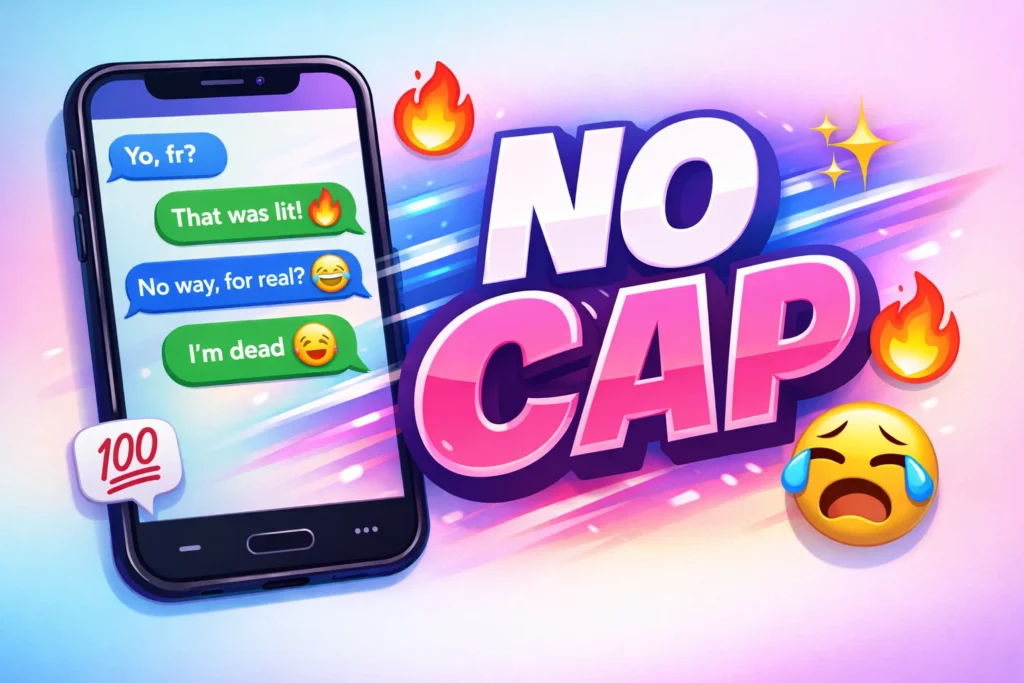
“No cap” means “no lie” or “I’m telling the truth.” It’s a slang phrase used in texting and social media to emphasize honesty, sincerity, or authenticity. When someone says “no cap,” they’re making it clear they’re not exaggerating or joking.
If you’ve spent any time on TikTok, Instagram, or texting with friends, you’ve probably seen the phrase “no cap” pop up again and again. It’s short, catchy, and packed with meaning—but if you’re not familiar with modern slang, it can feel confusing at first.
Is it about hats? Is it sarcasm? Or is it something deeper?
The truth is, “no cap” has become one of the most widely used expressions in online conversations today. From casual chats to viral captions, it’s a go-to way to show honesty, hype something up, or keep things real.
In this guide, you’ll learn exactly what “no cap” means in text, where it came from, how to use it properly, and how it compares to similar slang terms.
Origin of “No Cap”
The phrase “no cap” comes from African American Vernacular English (AAVE), where the word “cap” has been used for years to mean “a lie” or “false statement.”
- “Cap” = lie or exaggeration
- “No cap” = no lie / truth
How It Became Popular
“No cap” started gaining mainstream attention through:
- Hip-hop culture and rap lyrics
- Social media platforms like TikTok and Twitter
- Influencers and meme culture
Artists and internet creators helped push the phrase into everyday usage, especially among younger audiences.
Today, it’s a global slang term used in texting, comments, captions, and even casual conversations.
How “No Cap” Is Used in Texting
“No cap” is usually added to a sentence to emphasize honesty or seriousness. It can appear at the beginning, middle, or end of a message.
Common Usage Styles
- At the end of a sentence:
“That movie was amazing, no cap.” - At the beginning:
“No cap, I was really nervous.” - As a standalone reply:
“No cap.” (Meaning: I agree / That’s true)
Examples of “No Cap” in Different Contexts
Here are real-life style examples to help you understand how it’s used in everyday texting:
Friendly Tone 😊
- “You’re the best friend ever, no cap.”
- “That food was delicious, no cap 🍔🔥”
- “I had so much fun today, no cap.”
Excited or Hype Tone 🔥
- “That game was insane, no cap!”
- “This song is a total bop, no cap 🎧”
- “Best day of my life, no cap!”
Serious or Honest Tone 💬
- “No cap, I was really upset yesterday.”
- “I studied all night, no cap.”
- “No cap, this is harder than I thought.”
Slightly Dismissive or Assertive Tone 😐
- “No cap, that idea won’t work.”
- “I told you already, no cap.”
Example Table: “No Cap” in Text Conversations
| Situation | Example Sentence | Meaning | Tone |
|---|---|---|---|
| Compliment | “You look amazing, no cap.” | Genuine praise | Friendly |
| Food review | “That burger was perfect, no cap 🍔” | Honest opinion | Casual |
| Agreement | “No cap, I agree with you.” | Confirming truth | Neutral |
| Serious confession | “No cap, I was scared.” | Honest emotion | Serious |
| Hype moment | “That match was crazy, no cap 🔥” | Strong excitement | Energetic |
When to Use “No Cap” (And When Not To)
Use It When:
- You want to emphasize honesty
- You’re speaking in a casual or informal setting
- You’re chatting with friends or posting on social media
Avoid It When:
- Writing formal emails or professional messages
- Talking in serious business or academic settings
- Communicating with people unfamiliar with slang
Comparison: “No Cap” vs Similar Slang Terms
Understanding similar expressions helps you use “no cap” more naturally.
| Term | Meaning | Example | Difference |
|---|---|---|---|
| No cap | No lie / truth | “That was amazing, no cap.” | Focus on honesty |
| Fr (for real) | Seriously / genuinely | “That was scary, fr.” | Slightly softer |
| Ong | On God (swearing truth) | “I didn’t do it, ong.” | Stronger emphasis |
| Deadass | Completely serious | “I’m deadass tired.” | More intense |
| No lie | Honest statement | “That was hard, no lie.” | More formal alternative |
Alternate Meanings of “Cap” (Quick Note)
While “no cap” is the most popular meaning, “cap” can have slightly different uses depending on context:
- “That’s cap” = That’s a lie
- “Stop capping” = Stop lying or exaggerating
These variations are commonly used in the same slang family.
Polite or Professional Alternatives
If you want to express the same idea without slang, here are better options:
- “Honestly”
- “To be truthful”
- “Seriously”
- “I’m not exaggerating”
- “In all honesty”
Example Conversions
- “That was the best meal ever, no cap.”
→ “That was honestly the best meal I’ve had.” - “No cap, I was nervous.”
→ “To be honest, I was nervous.”
Tips for Using “No Cap” Naturally
- Keep it casual—it’s not meant for formal situations
- Don’t overuse it in every sentence
- Pair it with emotions or opinions for stronger impact
- Use emojis sparingly to match tone (🔥😂😩)
FAQs:
1. What does “no cap” mean in slang?
It means “no lie” or “I’m being honest.” It’s used to emphasize truth.
2. What does “cap” mean by itself?
“Cap” means a lie or exaggeration.
3. Is “no cap” a compliment?
It can be! For example, “You’re amazing, no cap” is a genuine compliment.
4. Can “no cap” be rude?
Not usually, but tone matters. It can sound blunt if used in criticism.
5. Who uses “no cap” the most?
It’s most common among younger people, especially on social media.
6. Is “no cap” appropriate for school or work?
It’s better to avoid it in formal or professional settings.
7. What’s the opposite of “no cap”?
The opposite would be “cap,” meaning a lie.
8. Can I use “no cap” in captions?
Yes! It’s very popular in Instagram, TikTok, and Snapchat captions.
Conclusion:
“No cap” is a simple but powerful slang phrase that adds honesty and emphasis to everyday conversations. Whether you’re texting friends, posting on social media, or reacting to something exciting, it helps you express that you’re being real and not exaggerating.
Use “no cap” naturally and sparingly to keep your tone authentic. When used correctly, it makes your message feel more genuine, relatable, and engaging no cap 😉
Discover More Related Articles:

Ryan Thompson is an experienced content writer specializing in slang terms, texting abbreviations, and word meanings. He writes for meanvoro.com, where he creates accurate and easy-to-understand language content for readers.