Definition:
LP in vinyl means “Long Play,” a type of vinyl record format designed to play for a longer duration typically around 30 to 60 minutes compared to older record formats. LPs are usually 12-inch records played at 33⅓ RPM and commonly contain full albums.
If you’ve ever browsed vinyl records whether in a music store, online marketplace, or a friend’s collection you’ve probably come across the term “LP” and wondered what it actually means. Is it a format? A size? A sound quality level? Or just old-school music slang?
The truth is, LP is one of the most important terms in vinyl culture, and understanding it gives you a deeper appreciation of how records are made, played, and enjoyed even today.
In this guide, we’ll break down everything you need to know about what LP means in vinyl, where it comes from, how it’s used, and why it still matters in the modern music world.
Origin of LP in Vinyl Records
The term LP (Long Play) has a fascinating history rooted in the evolution of recorded music.
The Beginning of Vinyl Records
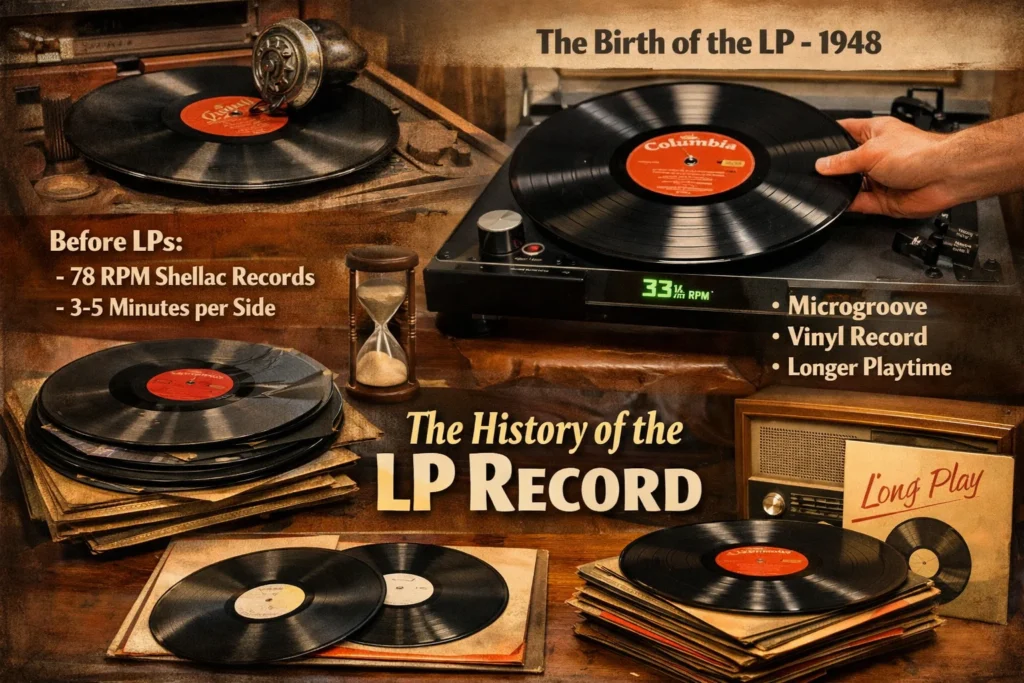
Before LPs existed, most records were:
- Short in duration
- Played at 78 RPM (revolutions per minute)
- Made of brittle shellac material
- Limited to about 3–5 minutes per side
This meant songs were extremely short, and full albums were impossible.
The Birth of the LP
In 1948, Columbia Records introduced the LP vinyl record, revolutionizing the music industry. Key innovations included:
- Slower playback speed (33⅓ RPM)
- Microgroove technology (smaller grooves for more audio data)
- Durable vinyl material instead of shellac
This allowed artists to release full-length albums on a single disc for the first time.
Why It Was Called “Long Play”
The name “Long Play” was chosen because:
- It could hold much longer recordings
- Entire albums could fit on one or two sides
- It dramatically improved listening experience
This was a major leap forward in music history.
What LP Means in Vinyl Records Today
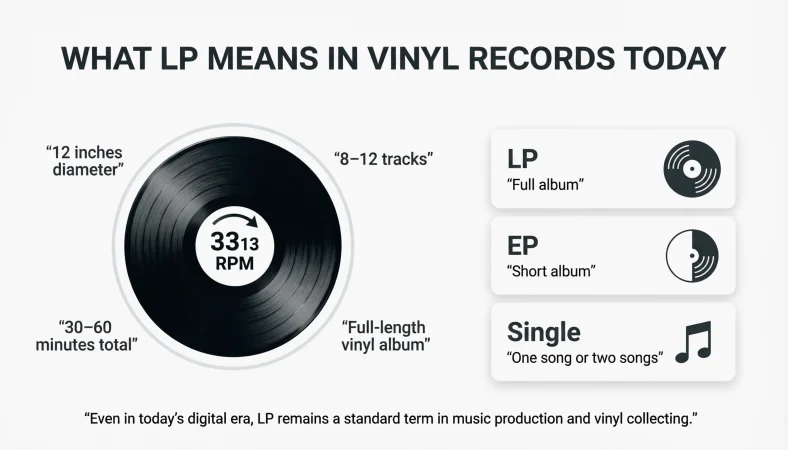
In modern usage, LP still refers to a full-length vinyl album.
Typically, an LP record:
- Is 12 inches in diameter
- Plays at 33⅓ RPM
- Contains 8–12 tracks on average
- Runs for 30–60 minutes total
Simple Breakdown:
- LP = Full album
- EP = Short album
- Single = One song or two songs
Even in today’s digital era, LP remains a standard term in music production and vinyl collecting.
Why LP Vinyl Records Became Popular
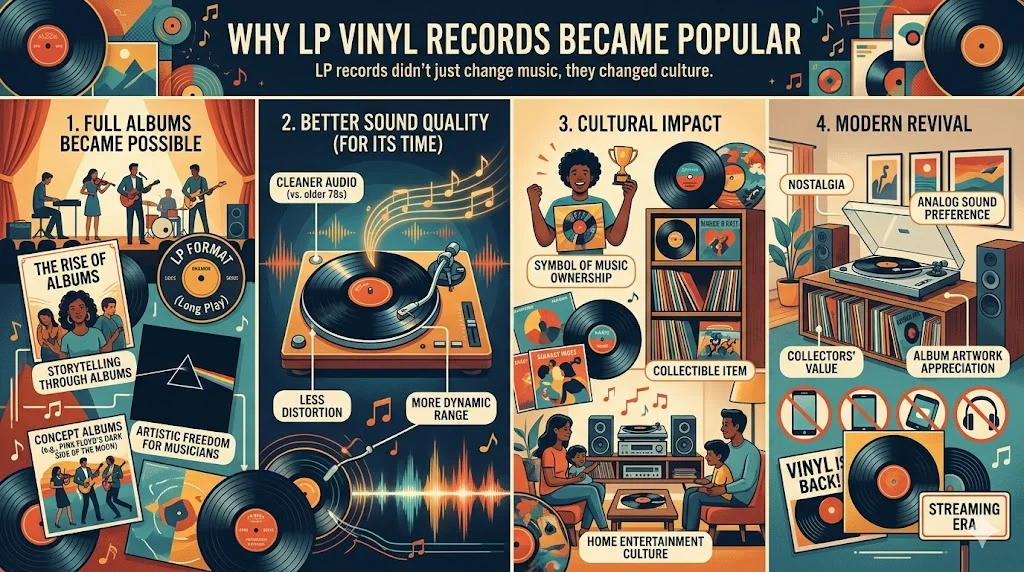
LP records didn’t just change music they changed culture.
1. Full Albums Became Possible
Before LPs, music was fragmented. LPs allowed:
- Storytelling through albums
- Concept albums (like Pink Floyd’s works)
- Artistic freedom for musicians
2. Better Sound Quality (For Its Time)
LPs provided:
- Cleaner audio compared to older formats
- Less distortion
- More dynamic range
3. Cultural Impact
LPs became:
- A symbol of music ownership
- A collectible item
- A part of home entertainment culture
4. Modern Revival
Even in the streaming era, LP vinyl has made a comeback due to:
- Nostalgia
- Analog sound preference
- Collectors’ value
- Album artwork appreciation
How LP Vinyl Records Are Used Today
Even though digital music dominates, LPs are still widely used in:
Music Listening
- Audiophiles prefer analog sound
- DJs use vinyl for mixing
- Collectors play rare pressings
Music Collecting
LPs are valued for:
- Limited editions
- Colored vinyl releases
- Original pressings
Display and Decoration
Many people also use LPs for:
- Wall art
- Room decor
- Vintage aesthetic displays
LP vs Other Vinyl Formats
Understanding LP becomes easier when compared with other formats.
Comparison Table
| Format | Full Name | Size | Speed | Duration | Content Type |
|---|---|---|---|---|---|
| LP | Long Play | 12 inch | 33⅓ RPM | 30–60 min | Full album |
| EP | Extended Play | 7–10 inch | 33⅓ or 45 RPM | 10–25 min | Short album |
| SP | Single Play | 7 inch | 45 RPM | 3–8 min | Single song |
| 78 RPM | Shellac Record | 10–12 inch | 78 RPM | 3–5 min | Old recordings |
Key Differences
- LP = full album experience
- EP = mini album
- Single = one hit song
- 78 RPM = historical format
Real-World Examples of LP Usage
To understand how “LP” is used in real conversations, here are some examples:
Friendly Tone Examples
- “I just bought the new Taylor Swift LP 🎶”
- “This Beatles LP sounds amazing on vinyl.”
- “Do you prefer CD or LP versions?”
Neutral Tone Examples
- “The artist released a double LP last week.”
- “This record is available as an LP and digital download.”
Slightly Dismissive or Old-School Tone
- “Oh, you still collect LPs? That’s vintage.”
- “LPs are nice, but streaming is more convenient.”
Professional Music Industry Usage
- “The album will be pressed as a 180-gram LP.”
- “We are releasing a limited edition colored LP.”
Tone and Context of “LP”
The meaning of “LP” doesn’t change, but the tone depends on context.
Neutral Usage
Used in technical or music industry settings:
- “LP release”
- “vinyl LP pressing”
Casual Usage
Used by fans or collectors:
- “I got this LP yesterday!”
Enthusiast Tone
Used by vinyl collectors:
- “This LP has incredible analog warmth.”
Professional Tone
Used in production or marketing:
- “The LP format will be available worldwide.”
Alternative Meanings of LP
While LP mostly means Long Play in vinyl records, it can also mean other things depending on context:
1. Limited Partnership (Business)
- A legal business structure
2. Liquid Propane (Energy/Fuel)
- Used in heating and cooking systems
3. Landing Page (Digital Marketing)
- A webpage designed for conversions
4. Low Pressure (Science/Weather)
- Used in meteorology
However, in the context of vinyl records, LP always refers to Long Play albums.
Polite or Professional Alternatives
While “LP” is already a standard term, you can also say:
- “Full-length album (vinyl)”
- “Vinyl album release”
- “12-inch record”
- “Long-playing record”
These alternatives are useful in:
- Formal writing
- Product descriptions
- Academic or historical discussions
FAQs:
1. What does LP stand for in vinyl records?
LP stands for Long Play, referring to full-length vinyl albums.
2. How long is an LP record?
Most LPs run between 30 to 60 minutes total.
3. What size is an LP vinyl?
An LP is usually a 12-inch record.
4. Is LP better than EP?
Neither is “better” LP is a full album, EP is a shorter release.
5. Why are LPs 33⅓ RPM?
This speed allows longer playback time with good audio quality.
6. Are LPs still made today?
Yes, LP vinyl records are still widely produced and collected.
7. What is the difference between LP and vinyl?
“Vinyl” is the material; LP is a type of vinyl record format.
8. Do LPs sound better than digital music?
Many listeners prefer LPs for their warm, analog sound, but it depends on preference.
Conclusion
The term LP in vinyl records stands for “Long Play,” and it represents one of the most important milestones in music history. It transformed how albums were created, allowing artists to present full-length works instead of short individual songs.
Today, LPs remain highly valued for:
- Their nostalgic appeal
- Rich analog sound
- Collectible nature
- Artistic album presentation
Whether you’re a casual listener or a serious vinyl collector, understanding LP helps you appreciate music in a deeper, more meaningful way.
In short, LP isn’t just a format it’s a cultural symbol of how we experience music.
Discover More Related Articles:

Madison Taylor is an experienced content writer who focuses on researching and explaining word meanings, slang, and texting terms. She writes for meanvoro.com, creating clear and accurate to help readers understand language easily.