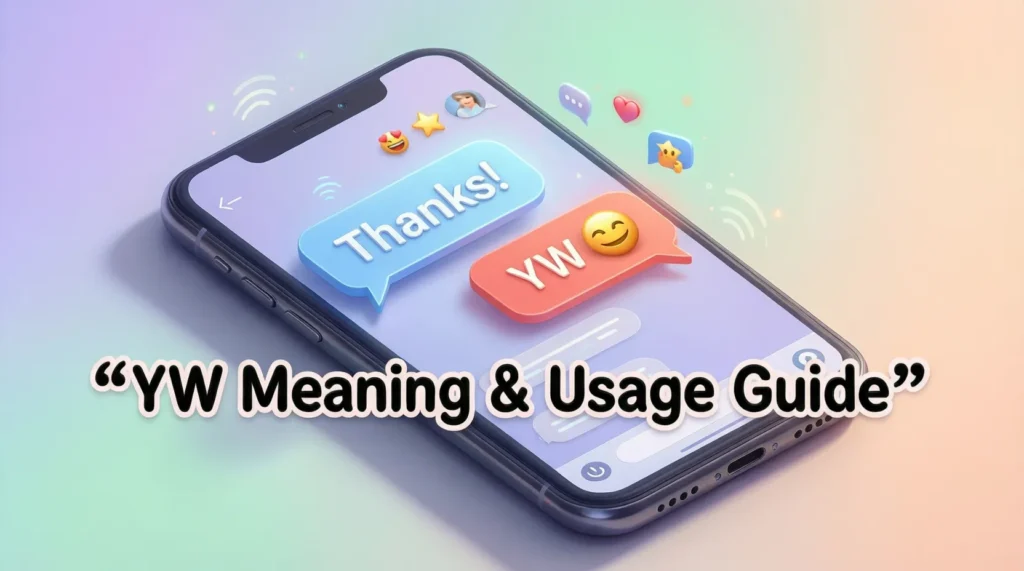
YW is an internet slang abbreviation that stands for “You’re welcome.” It is commonly used in text messages, chats, and social media as a short, casual response to someone saying “thank you.”
In the fast-paced world of texting, social media, and online chatting, abbreviations and slang are everywhere. If you’ve ever received a quick “YW Mean in Slang” in response to a message, you might have paused and wondered, “Wait, what does YW mean?”
Don’t worry this guide is here to break it all down for you in a clear, friendly, and informative way.
While “YW” might seem simple, there’s more to it than just being a shorthand. Its usage, tone, and subtle nuances can vary depending on the context.
This article dives deep into everything you need to know about “YW,” including origin, examples, comparisons, alternatives, and FAQs.
Origin of YW in Slang
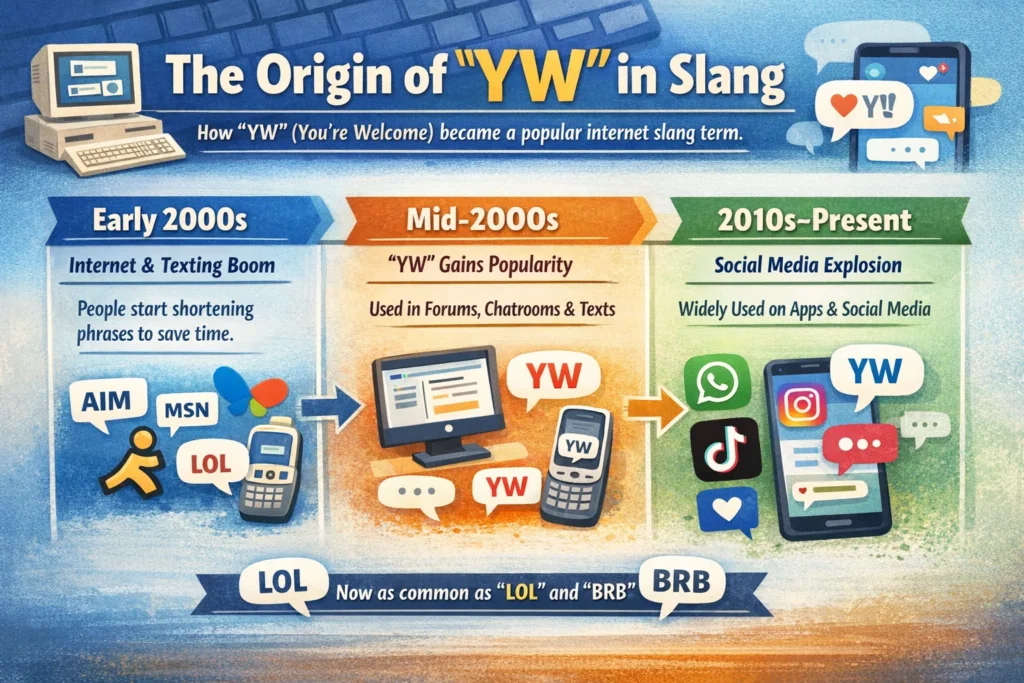
The abbreviation YW emerged as part of the evolution of internet slang and texting shorthand in the early 2000s. The rise of instant messaging platforms like AOL Instant Messenger, MSN Messenger, and later texting and social media, created a demand for faster ways to communicate.
Here’s a quick timeline of YW’s development:
- 2000s: Internet and texting culture expand. People start shortening common phrases to save typing time.
- Mid-2000s: “YW” becomes popular in forums, chatrooms, and text messaging.
- 2010s–Present: With the explosion of social media apps like WhatsApp, Instagram, and TikTok, YW becomes widely recognized among younger generations.
The abbreviation is now so common that many people use it without even thinkingsimilar to “LOL” for laughing out loud or “BRB” for be right back.
Usage of YW in Texting and Online Communication
YW is typically used as a casual, friendly response to expressions of gratitude. Its tone is often neutral to positive, depending on the context.
Common Situations to Use YW:
- Responding to thank you messages from friends, family, or colleagues
- Social media interactions, such as replying to comments
- Online gaming or collaborative platforms when someone acknowledges your help
Example
| Context | Conversation Example | Tone/Meaning |
| Friendly Text | Friend: “Thanks for helping me with my homework!”You: “YW 😊” | Casual, friendly |
| Neutral Professional | Colleague: “Thanks for sharing the report.”You: “YW.” | Polite but concise |
| Playful | Friend: “Thanks for the meme!”You: “YW 😎” | Lighthearted, playful |
| Dismissive | Stranger: “Thanks for the info.”You: “YW.” | Could seem curt if tone isn’t clear |
Tone and Nuances of YW
Although YW is generally positive, context, punctuation, and emoji use can change its perceived tone:
- Neutral: “YW.” – Simple, standard response
- Friendly: “YW 😊” or “YW 😄” – Adds warmth and friendliness
- Playful/Flirty: “YW 😏” – Can add a playful or teasing tone
- Dismissive: “YW” without emoji or punctuation – Might come off as short or uninterested
Tip: Always consider your relationship with the person and the conversation tone before using YW, especially in professional settings.
Comparison with Similar Terms and Abbreviations
YW isn’t the only way to respond to a “thank you.” Here’s a breakdown of similar slang and abbreviations:
| Abbreviation/Term | Meaning | Tone | Use Case |
| NP | No problem | Casual, friendly | Informal texting |
| Npnp | No problem, no problem | Extra casual, playful | Among close friends |
| TY | Thank you | Expressing gratitude | Anytime, both casual and formal |
| Thx / Tx | Thanks | Casual, shorthand | Quick texting or social media |
| Sure / No worries | Polite, reassuring | Friendly/professional | Neutral, supportive response |
| Anytime | You’re welcome | Polite, slightly warm | Friendly tone, versatile response |
Alternate Meanings of YW
Although YW most commonly means “You’re welcome”, context can sometimes change its interpretation:
- YW in academic or workplace slang: Occasionally used to abbreviate a person’s initials or organization names, but these are rare
- YW in gaming: Sometimes shorthand for “Yes, why” in fast-paced game chats, though this is less common
Tip: When in doubt, always interpret YW as “You’re welcome,” unless the context clearly indicates otherwise.
Polite and Professional Alternatives to YW
In professional or formal settings, using YW might feel too casual. Here are some alternatives:
- “You’re welcome” – Standard, polite, and safe
- “My pleasure” – Slightly warmer and more gracious
- “No problem” – Informal, still professional in many contexts
- “Happy to help” – Friendly and approachable tone
- “Anytime” – Warm, implies willingness to help in the future
Example
| Setting | YW Alternative | Example |
| Professional email | “You’re welcome” | “Thank you for reviewing my report.”“You’re welcome.” |
| Friendly chat | “No problem 😊” | “Thanks for picking up my groceries!”“No problem 😊” |
| Team collaboration | “Happy to help!” | “Thanks for the presentation support.”“Happy to help!” |
Examples of YW in Texts and Social Media
Seeing YW in action helps you understand its usage better. Here are some real-world examples:
- Friendship:
- Friend: “Thanks for lending me your notes.”
- You: “YW, happy to help! 😄”
- Friend: “Thanks for lending me your notes.”
- Family:
- Sibling: “Thanks for grabbing my lunch.”
- You: “YW, anytime! ❤️”
- Sibling: “Thanks for grabbing my lunch.”
- Professional/Neutral:
- Colleague: “Thanks for submitting the draft early.”
- You: “YW.”
- Colleague: “Thanks for submitting the draft early.”
- Online Communities / Gaming:
- Player1: “Thanks for the heal!”
- Player2: “YW, team!”
- Player1: “Thanks for the heal!”
Common Mistakes to Avoid with YW
While YW is simple, misuse can make your message appear rude or confusing. Here’s what to avoid:
- Using YW in formal emails – Stick to full “You’re welcome” instead
- Overusing emojis – Can dilute professionalism
- Ignoring context – In ambiguous situations, YW could seem dismissive
- Assuming everyone understands – Some people unfamiliar with internet slang may not know what YW means
FAQs
- Is YW formal or informal?
YW is informal and best used in texting, chats, and social media. - Can YW be used professionally?
Yes, but only in casual work chat or internal team communication. Avoid it in emails to clients or superiors. - Does YW always mean “You’re welcome”?
Mostly yes, but context matters. Rarely, it could be initials or other shorthand. - How do I make YW sound friendly?
Add a smiley emoji or extra words: “YW 😊” or “YW, no problem!” - Is YW considered rude?
Not inherently. It can seem curt if sent without context or emojis in sensitive conversations. - What’s the difference between YW and NP?
YW = You’re welcome, while NP = No problem. NP is more casual and often conveys reassurance. - Can I use YW in gaming chats?
Absolutely! It’s very common among online gamers. - Are there other abbreviations similar to YW?
Yes! Some include NP (No problem), TY (Thank you), and Thx/Tx (Thanks).
Conclusion
YW stands for “You’re welcome”, a casual and friendly response when someone says “thank you.” Its tone can vary depending on context and emojis—sometimes friendly, neutral, or even playful.
YW is very common in texting, social media, and online chats, but in professional or formal settings, alternatives like “You’re welcome”, “My pleasure”, or “Happy to help” are more appropriate.
Discover More Related Articles:
- JOI Mean in Porn | Understanding the Adult Content Slang Term In 2026
- The Root Tele Mean in Television | Understanding the Word’s Origin In 2026
- Closed Circle Mean in Math |The Symbol Most Students Misunderstand In 2026

Ryan Thompson is an experienced content writer specializing in slang terms, texting abbreviations, and word meanings. He writes for meanvoro.com, where he creates accurate and easy-to-understand language content for readers.