
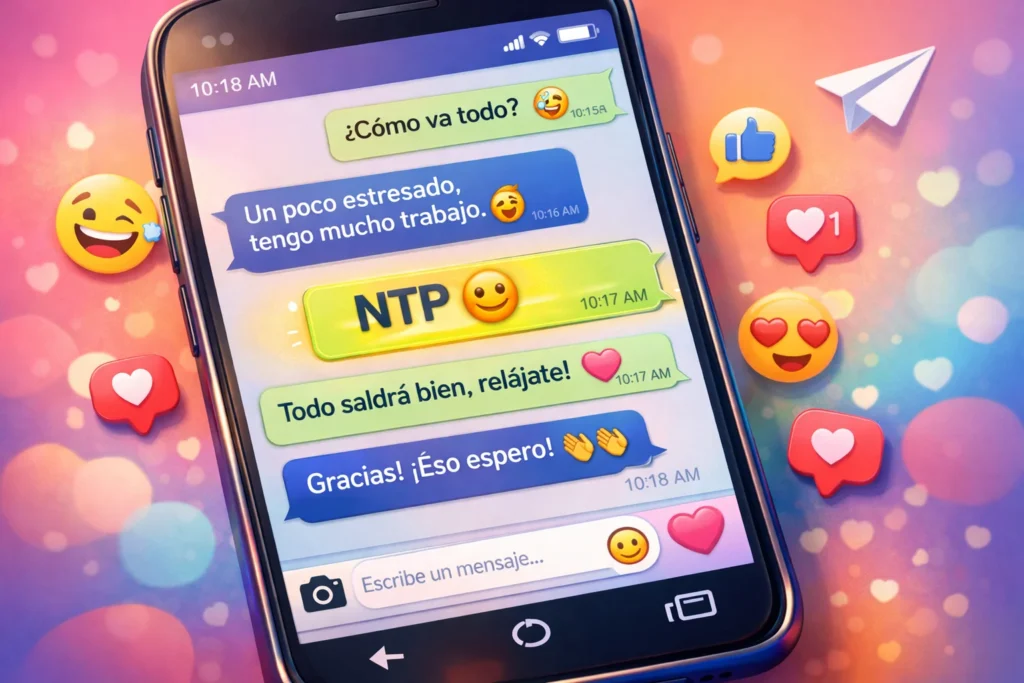
Definition
“NTP” in Spanish stands for “No Te Preocupes,” which translates to “Don’t worry” or “No problem” in English.
It’s commonly used in casual conversations, especially in texting and online chats, to reassure someone.
If you’ve ever talked with Spanish speakers online or scrolled through social media comments, you may have noticed the abbreviation “NTP” and wondered what it actually means. At first, it can seem a bit confusing—does it refer to something technical, or is it just another piece of internet slang? And more importantly, is it polite or offensive?
In reality, “NTP” is a common shorthand used in everyday Spanish texting and casual conversations. It’s not complicated once you understand it, but knowing its meaning can help you read messages more naturally and avoid misinterpretations.
In this article, we’ll break down exactly what “NTP” means, how it’s used in different situations, and give you real examples so you can understand its tone and context with confidence.
What Does NTP Mean in Spanish?
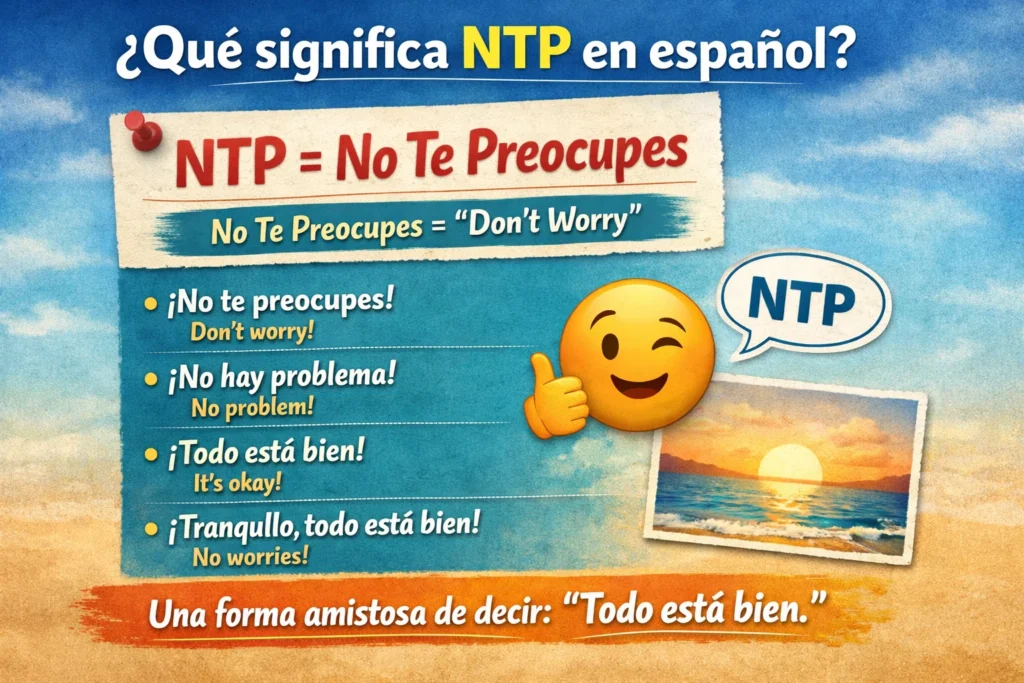
In simple terms:
- NTP = No Te Preocupes
- English meaning:
- Don’t worry
- No worries
- It’s okay
- No problem
It’s a friendly and informal way to calm someone down or let them know everything is fine.
Origin and Popularity
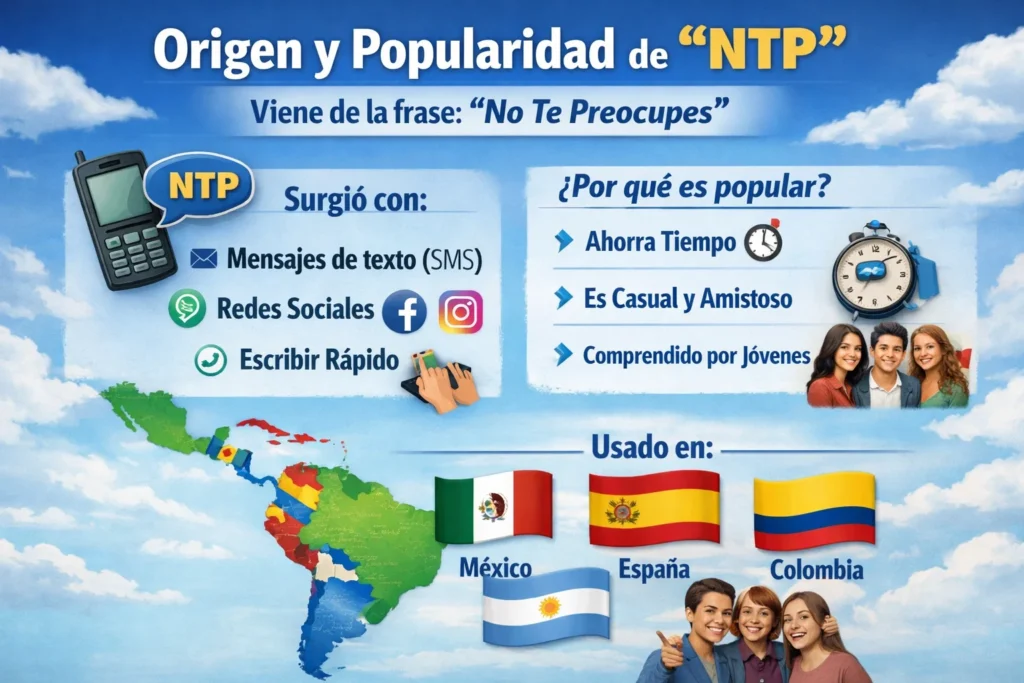
Where did “NTP” come from?
“NTP” comes from the natural abbreviation of the phrase “No Te Preocupes.” Like many internet slang terms, it became popular due to:
- Text messaging (SMS culture)
- Social media platforms (WhatsApp, Facebook, Instagram)
- Fast typing habits
Why is it popular?
- Saves time while typing ⏱️
- Feels casual and friendly
- Widely understood among younger audiences
Today, it’s commonly used across Spanish-speaking countries like:
- Mexico 🇲🇽
- Spain 🇪🇸
- Argentina 🇦🇷
- Colombia 🇨🇴
How “NTP” Is Used in Real Conversations

“NTP” is typically used to:
- Reassure someone
- Respond to apologies
- Show that something isn’t a big deal
Example Situations
| Situation | Message | Meaning |
|---|---|---|
| Someone apologizes | “Perdón por llegar tarde” → “NTP 😊” | Don’t worry |
| Someone feels stressed | “Estoy nervioso por el examen” → “NTP, todo saldrá bien” | Don’t worry, it’ll be fine |
| Minor mistake | “Creo que me equivoqué” → “NTP” | No problem |
Tone and Context (Very Important!)
Even though “NTP” is usually positive, tone matters depending on how it’s used.
1. Friendly Tone 😊
- “NTP, yo te ayudo”
- Meaning: Don’t worry, I’ll help you
👉 Warm, supportive, kind
2. Neutral Tone 😐
- “NTP”
- Meaning: No problem
👉 Simple acknowledgment
3. Slightly Dismissive Tone 😶
- “NTP… ya está”
- Meaning: Don’t worry about it (let’s move on)
👉 Can feel a bit distant depending on context
Examples in Conversations
Casual Chat
- A: “Sorry I forgot to reply”
- B: “NTP 👍”
👉 Meaning: No worries
Supportive Situation
- A: “I think I messed up”
- B: “NTP, todo tiene solución 💪”
👉 Meaning: Don’t worry, everything has a solution
Friendly Reassurance
- A: “¿Te molestó lo que dije?”
- B: “NTP, para nada 😊”
👉 Meaning: Not at all, don’t worry
Comparison With Similar Spanish Abbreviations
Here’s how “NTP” compares to other common abbreviations:
| Abbreviation | Full Form | Meaning | Tone |
|---|---|---|---|
| NTP | No Te Preocupes | Don’t worry | Friendly |
| NP | No Problem | No problem | Neutral |
| TQM | Te Quiero Mucho | Love you a lot | Emotional |
| XQ | Porque | Because | Neutral |
| TMB | También | Also | Neutral |
👉 Key difference:
“NTP” is specifically about reassurance, while others serve different purposes.
Polite or Professional Alternatives
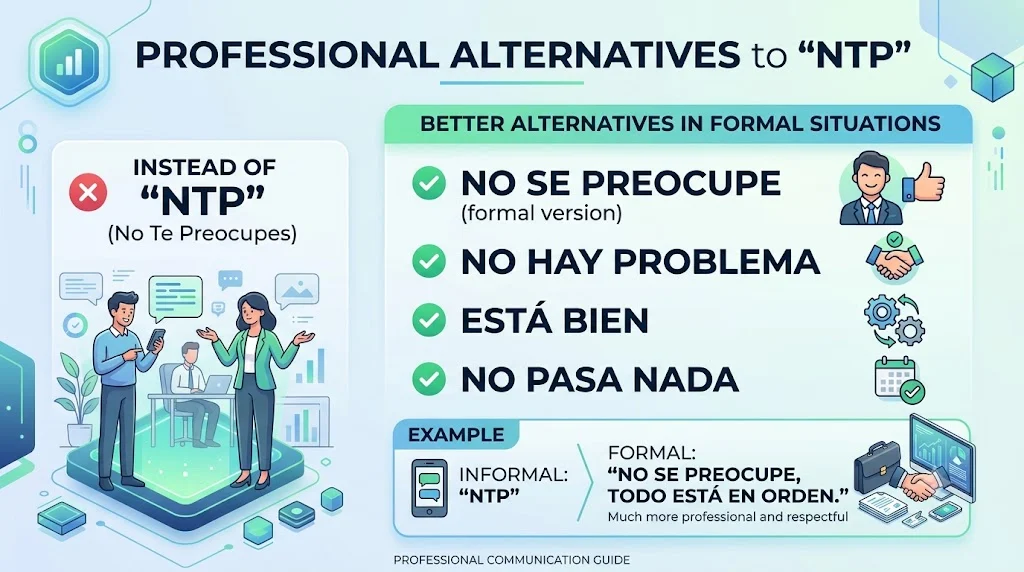
“NTP” is informal, so it’s not always suitable for professional settings.
Better Alternatives in Formal Situations
- No se preocupe (formal version)
- No hay problema
- Está bien
- No pasa nada
Example:
Instead of:
- “NTP”
Use:
- “No se preocupe, todo está en orden.”
👉 Much more professional and respectful
Alternate Meanings of NTP
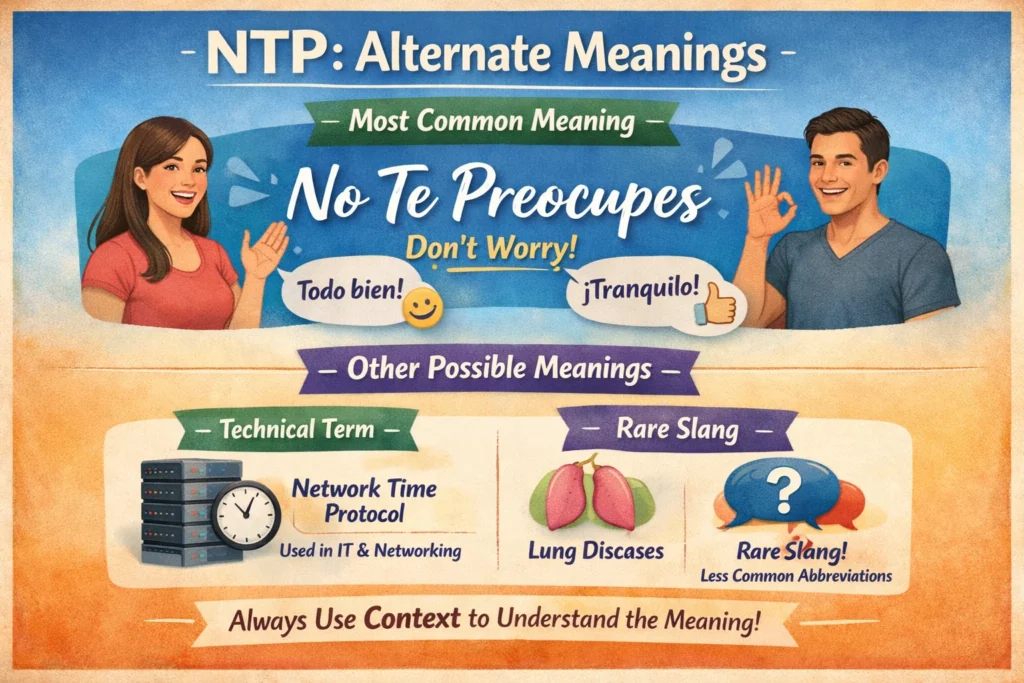
While “NTP” usually means “No Te Preocupes”, it can have other meanings depending on context:
1. Technical Meaning
- Network Time Protocol (NTP)
👉 Used in IT and networking
2. Rare Slang Uses
- In some contexts, abbreviations can vary, but “No Te Preocupes” is the most common Spanish meaning
👉 Always rely on context to understand the correct meaning
When NOT to Use “NTP”
Avoid using “NTP” in:
- Formal emails 📧
- Job interviews 💼
- Academic writing 📚
- Professional communication
👉 It may come across as too casual or unprofessional
Usage Tips for Beginners
- ✔ Use it in chats with friends
- ✔ Great for texting and social media
- ✔ Pair with emojis to soften tone 😊
- ❌ Avoid in serious or formal contexts
FAQs
1. What does NTP mean in Spanish texting?
It means “No Te Preocupes,” which translates to “Don’t worry” or “No problem.”
2. Is “NTP” rude?
No, it’s generally friendly. However, tone can feel slightly dismissive depending on context.
3. Can I use “NTP” in formal situations?
No. It’s informal. Use “No se preocupe” instead.
4. What is the English equivalent of NTP?
Don’t worry, no worries, or no problem.
5. Is “NTP” used in all Spanish-speaking countries?
Yes, it’s widely understood, especially in online communication.
6. Does “NTP” always mean the same thing?
Mostly yes, but in technical contexts it can also mean Network Time Protocol.
7. Can I use “NTP” with strangers?
Yes, but only in casual contexts like chats or social media.
8. How do you respond to “NTP”?
You can reply with “Gracias 😊”, “Ok 👍”, or “Perfecto.”
Conclusion
“NTP” is a simple yet powerful abbreviation in Spanish that makes conversations smoother and more relaxed. It stands for “No Te Preocupes,” meaning “Don’t worry”, and is widely used in casual texting and online chats.
The key is understanding context and tone while it’s perfect for chats with friends or social media, it’s best to avoid it in formal or professional situations. In those cases, phrases like “No se preocupe” or “No hay problema” work better.
By understanding when and how to use “NTP,” you can sound more natural and confident in Spanish conversations.
Discover More Related Articles:

Ryan Thompson is an experienced content writer specializing in slang terms, texting abbreviations, and word meanings. He writes for meanvoro.com, where he creates accurate and easy-to-understand language content for readers.