Definition
In the military, UA stands for Unauthorized Absence. It refers to a situation where a service member fails to report for duty or leaves their assigned place without official permission. Being UA means the individual is absent without authorization, which can lead to disciplinary action depending on the duration and circumstances of the absence.
Military organizations operate under strict rules and regulations to maintain discipline, readiness, and accountability. One term that often appears in military discussions is UA, which stands for Unauthorized Absence. The term refers to a service member being absent from their assigned duty station without official permission or approval. While the concept may seem similar across different branches of the military, the terminology can vary depending on the organization.
UA is most commonly used by the U.S. Navy and Marine Corps, whereas other branches, such as the Army and Air Force, often use the term AWOL (Absent Without Leave) to describe a comparable situation. Understanding the meaning of UA is important because it can carry serious consequences, ranging from disciplinary action to legal penalties, depending on the circumstances and duration of the absence. In this article, we’ll explain what UA means, how it differs from AWOL, and why it plays an important role in maintaining military discipline.
Understanding the Term UA in the Military
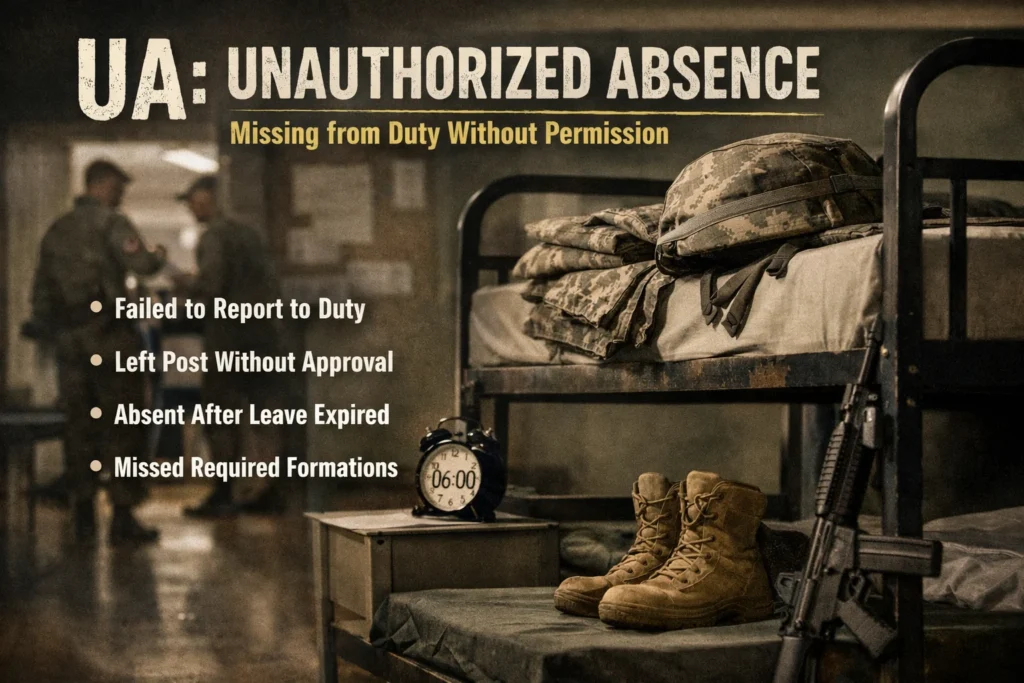
Basic meaning of UA
UA, or Unauthorized Absence, occurs when a military member:
- Does not report to their assigned duty station
- Leaves their post without approval
- Fails to return from leave on time
- Misses mandatory formations or assignments
In simple terms, it means a soldier or service member is missing from duty without proper permission.
Why the military uses the term UA
The military operates on strict schedules, responsibilities, and chain-of-command structures. Every service member has specific duties that contribute to the overall mission.
Because of this, being absent without authorization can:
- Disrupt operations
- Impact unit readiness
- Place additional pressure on other service members
For these reasons, the military takes unauthorized absences seriously.
Origin of the Term UA
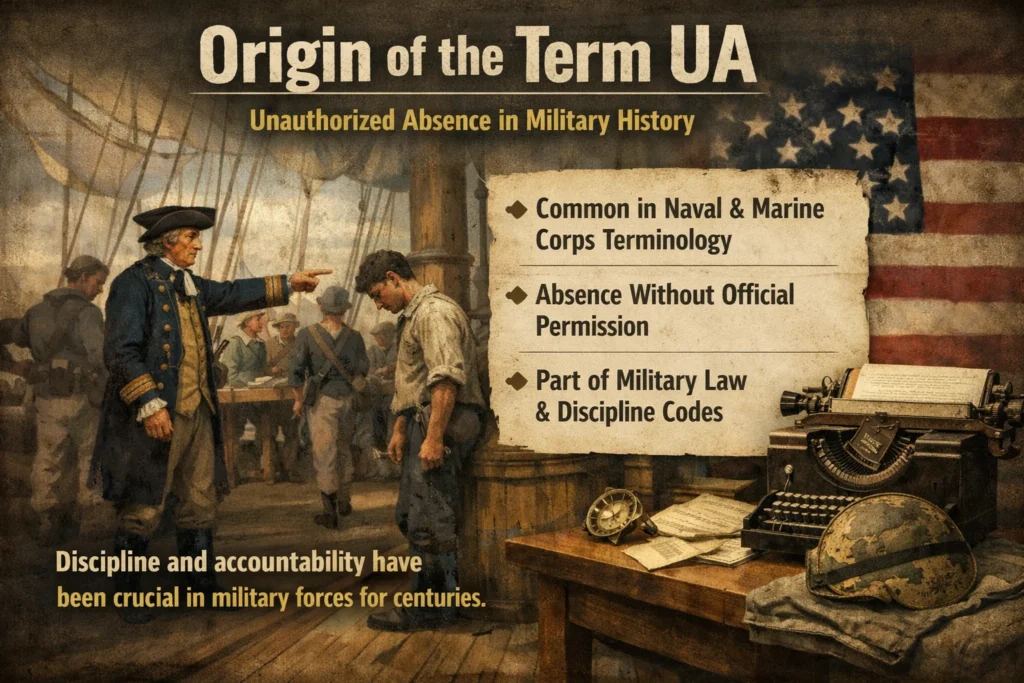
Historical background of UA
The concept of unauthorized absence has existed in military organizations for centuries. Discipline and accountability have always been essential in maintaining an effective fighting force.
Over time, specific terminology developed within different military branches.
Key points about the term:
- UA became common in Naval and Marine Corps terminology
- It describes absence without official permission
- The term is part of military legal procedures and disciplinary codes
How UA differs across branches
Different branches of the military may use slightly different terms.
For example:
- Navy and Marine Corps: UA (Unauthorized Absence)
- Army and Air Force: AWOL (Absent Without Leave)
Even though the wording differs, the basic meaning is essentially the same.
Common Situations That Count as UA
Missing a duty assignment
If a service member fails to show up for a scheduled duty or formation without approval, it may be considered UA.
Example:
A sailor scheduled for morning duty does not report and cannot be reached.
Leaving a duty station without permission
A person may also be marked UA if they leave their assigned location without authorization.
Example:
A Marine leaves the base during duty hours without approval.
Returning late from leave
If a service member is granted leave but does not return at the scheduled time, they may be classified as UA.
Example:
A soldier was approved to return on Monday but reports back on Wednesday.
Missing mandatory training or operations
Military personnel must attend required training and operational assignments. Failure to appear can result in UA status.
Example Situations of UA
Practical examples
| Situation | Example | Explanation |
|---|---|---|
| Missed duty | A sailor fails to report for a scheduled watch shift | Considered unauthorized absence |
| Late return from leave | A Marine returns days after approved leave ends | May be classified as UA |
| Leaving base without permission | A service member leaves during duty hours | Violates military regulations |
| Missing training | A soldier does not attend mandatory training | Could result in UA status |
These situations illustrate how unauthorized absence can occur in everyday military operations.
UA vs AWOL: Understanding the Difference
Comparison of common military absence terms
| Term | Meaning | Branches Commonly Using It |
|---|---|---|
| UA | Unauthorized Absence | Navy and Marine Corps |
| AWOL | Absent Without Leave | Army and Air Force |
| Desertion | Long-term unauthorized absence with intent not to return | All branches |
While UA and AWOL describe similar situations, desertion is a much more serious offense involving the intention to permanently avoid military duty.
Consequences of Unauthorized Absence
Possible disciplinary actions
The consequences of UA depend on factors such as:
- Length of absence
- Circumstances
- Previous conduct
- Operational impact
Possible outcomes may include:
- Counseling or warnings
- Loss of privileges
- Administrative action
- Military legal proceedings
Short absences may lead to minor disciplinary action, while longer absences can result in more serious consequences.
Why Accountability Is Important in the Military
Maintaining unit readiness
Military units rely on every member performing their duties. When someone is absent without authorization, it can:
- Delay operations
- Reduce team effectiveness
- Increase workload for others
Protecting mission success
Military missions often require precise coordination and teamwork. Accountability ensures that each role is filled and responsibilities are met.
For this reason, attendance and discipline are taken very seriously in military environments.
Related Military Terms
Common terms associated with UA
Understanding UA is easier when you know related military terms.
- Leave: Approved time away from duty
- Duty station: Assigned workplace or post
- Formation: Scheduled gathering of military personnel
- Chain of command: Leadership structure responsible for supervision
These terms help explain the context in which UA situations occur.
Professional Alternatives to the Term UA
How the concept may be described in formal writing
In professional or official contexts, UA may be described using phrases such as:
- Unauthorized absence
- Absence without authorization
- Failure to report for duty
- Unapproved absence
These expressions communicate the same idea in a more formal or descriptive way.
Practical Tips for Understanding Military Abbreviations
Why abbreviations are common in the military
The military frequently uses abbreviations because they:
- Save time in communication
- Provide standardized terminology
- Improve efficiency in reports and commands
Examples of common abbreviations include:
- UA – Unauthorized Absence
- AWOL – Absent Without Leave
- CO – Commanding Officer
- NCO – Non-Commissioned Officer
Learning these abbreviations helps people better understand military communication.
FAQs
What does UA mean in the military?
- UA stands for Unauthorized Absence, meaning a service member is absent from duty without permission.
Is UA the same as AWOL?
- They are very similar. UA is used mainly by the Navy and Marine Corps, while AWOL is used by the Army and Air Force.
What happens if someone goes UA?
- The consequences depend on the situation and length of absence, and may include disciplinary action or administrative measures.
How long can someone be UA?
- Any period of absence without permission can be considered UA, even if it is only a short time.
What is the difference between UA and desertion?
- UA is a temporary unauthorized absence, while desertion involves leaving with the intent not to return.
Can someone return from UA voluntarily?
- Yes, a service member may return voluntarily, which may influence how the situation is handled.
Why is UA taken seriously in the military?
- Because military operations rely on discipline, readiness, and teamwork.
Which military branches use the term UA?
- The U.S. Navy and Marine Corps commonly use the term UA.
Conclusion
The term UA (Unauthorized Absence) is an important concept in military discipline and organization. It refers to situations where a service member fails to report for duty or leaves their post without authorization.
Understanding UA helps explain how military organizations maintain order, accountability, and operational readiness.
By understanding terms like UA, readers gain a clearer picture of how military systems operate and why discipline plays such a vital role.
Discover More Related Articles:

Madison Taylor is an experienced content writer who focuses on researching and explaining word meanings, slang, and texting terms. She writes for meanvoro.com, creating clear and accurate to help readers understand language easily.