✅ Definition
Maki (まき / 巻き / 牧 / 槇) in Japanese is a word with multiple meanings depending on the kanji used.
It can mean to roll or wrap (巻き), firewood (薪), pasture or grazing land (牧), or be used as a given name. In food, “maki” most commonly refers to rolled sushi.
Ever heard the word “maki” and wondered what it really means in Japanese?
You’re not alone. “Maki” is one of those short, catchy Japanese words that pops up in food menus, anime, names, and everyday conversation but its meaning actually changes depending on how it’s written and used.
In this in-depth guide, you’ll learn exactly what “maki” means in Japanese, where it comes from, how native speakers use it, and how to tell the different meanings apart with confidence.
🔍 Why “Maki” Has Multiple Meanings in Japanese
Japanese is a context-based language, and many words sound the same but mean different things depending on:
- Kanji (Chinese characters)
- Situation or topic
- Tone and setting
- Whether it’s spoken or written
“Maki” is a perfect example of this.
📜 Origin of the Word “Maki”
The word maki originates from classical Japanese and Chinese-influenced writing systems. Each kanji represents a different concept, even though the pronunciation stays the same.
Here are the most common kanji forms:
| KanjiHiraganaCore Meaning | ||
|---|---|---|
| 巻き | まき | Roll / Wrap |
| 薪 | まき | Firewood |
| 牧 | まき | Pasture / Ranch |
| 槇 | まき | Japanese black pine (rare) |
🍣 Meaning #1: Maki (巻き) – “To Roll” or “Wrapped”
This is by far the most common meaning people encounter.
🥢 In Food (Most Popular Usage)
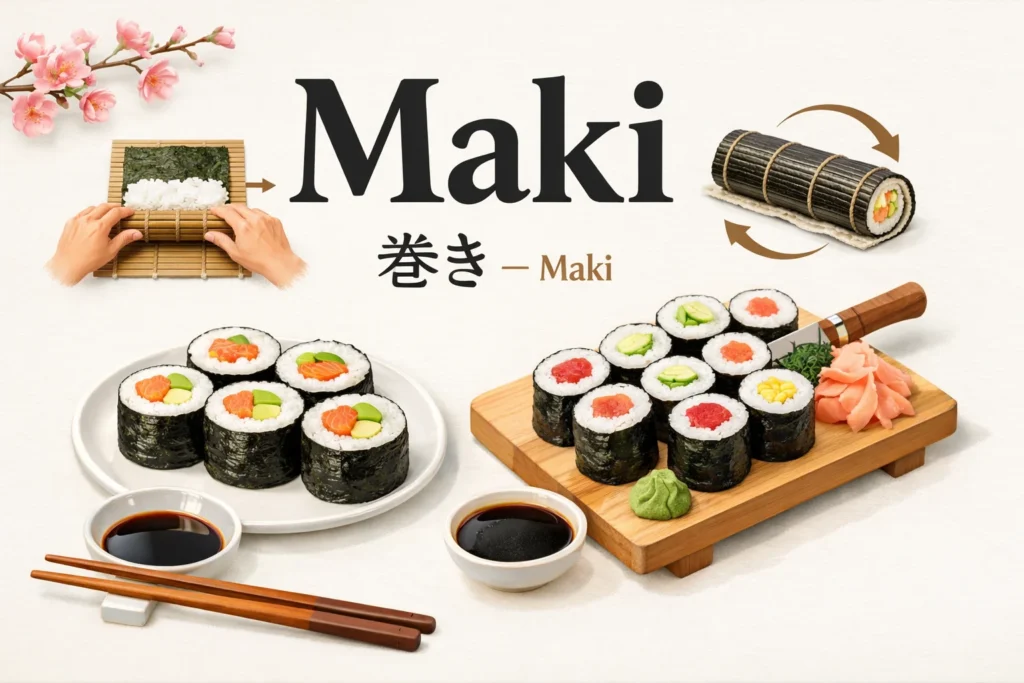
In Japanese cuisine, maki refers to rolled sushi, also known as makizushi.
Examples:
- Kappa maki – Cucumber roll
- Tekka maki – Tuna roll
- Futomaki – Thick sushi roll
- Hosomaki – Thin sushi roll
📌 Why it’s called maki:
Because the ingredients are rolled inside seaweed and rice.
🗣 Everyday Verb Usage
The verb form comes from 巻く (maku) meaning to roll, wind, or wrap.
Examples in context:
- マフラーを巻く
(Mafurā o maku) – To wrap a scarf 🧣 - 包帯を巻く
(Hōtai o maku) – To wrap a bandage
Tone: Neutral and practical
Usage level: Everyday conversation
🔥 Meaning #2: Maki (薪) – Firewood
This meaning is less common today, but still used in rural or traditional contexts.
薪 (maki) refers to:
- Firewood
- Wood used for cooking or heating
- Traditional baths or fireplaces
Example:
- 薪を割る
(Maki o waru) – To chop firewood 🪵
Tone: Neutral, traditional
Common in: Countryside, historical texts, old homes
🌾 Meaning #3: Maki (牧) – Pasture or Ranch
This version is often seen in place names, surnames, or formal writing.
牧 (maki) means:
- Grazing land
- Ranch
- Pasture for animals
Example:
- 牧場 (bokujō) – Ranch / Farm
- 牧野 (Makino) – A common Japanese surname
Tone: Formal, geographic
Usage: Written Japanese, names
🌲 Meaning #4: Maki (槇) – Tree Name or Surname (Rare)
This is a rare kanji meaning:
- Japanese black pine tree
- Family or place name
You’ll mostly see this in proper nouns, not daily speech.
👤 “Maki” as a Japanese Name
“Maki” is also a popular given name, especially for women, but it can be unisex.
Name Meanings Depend on Kanji
| Kanji | Meaning |
|---|---|
| 真希 | True hope |
| 麻紀 | Hemp + chronicle |
| 槇 | Pine tree |
| 牧 | Pasture / nurture |
📌 Important:
You can’t know the meaning of someone’s name unless you see the kanji.
🗣️ Real-World Usage & Tone
Friendly / Casual
- Sushi orders 🍣
- Daily actions (wrapping things)
- Names
Neutral / Professional
- Writing instructions
- Agriculture
- Geography
Traditional / Old-fashioned
- Firewood usage
- Rural settings
❌ Negative or dismissive tone?
“Maki” itself has no negative meaning. Any negativity comes from context not the word.
🆚 Comparison: Maki vs Similar Japanese Terms
| Term | Meaning | Difference |
|---|---|---|
| Maki (巻き) | Rolled | Focus on action |
| Maku (巻く) | To roll (verb) | Base verb form |
| Tsutsumu (包む) | To wrap | Enclosing fully |
| Uzu (渦) | Spiral | Shape-based |
| Roll (English) | Borrowed word | Less natural |
✨ Polite or Professional Alternatives
When speaking formally, you might hear:
- 巻きます (makimasu) – Polite verb form
- お巻きします – Respectful phrasing (service industry)
In writing:
- Use 包む (tsutsumu) for clarity
- Use 巻く in manuals or instructions
🧠 How to Know Which “Maki” Is Being Used
Ask yourself:
- Is this about food? → Sushi roll 🍣
- Is something being wrapped or rolled? → Verb usage
- Is it about fire, heat, or tradition? → Firewood
- Is it a name or place? → Kanji-dependent
Context always wins.
📊 Example Table: “Maki” in Different Situations
| Situation | Meaning | Example |
|---|---|---|
| Sushi menu | Rolled sushi | Kappa maki |
| Daily life | To wrap | Scarf |
| Countryside | Firewood | Wood stove |
| Name | Personal name | Maki Tanaka |
❓ FAQs:
1. What does maki mean in Japanese?
“Maki” can mean rolled, firewood, pasture, or a name, depending on kanji and context.
2. Is maki always related to sushi?
No. Sushi is just the most internationally recognized usage.
3. What is the kanji for sushi maki?
巻き or 巻
4. Is maki a verb or noun?
It can be both, depending on usage.
5. Is maki used in anime or manga?
Yes often as a character name or casual speech.
6. Does maki have slang meaning?
No common slang meaning exists in modern Japanese.
7. Is maki polite or rude?
Neutral. Politeness depends on verb form and situation.
8. How do I pronounce maki correctly?
MAH-kee (short, crisp vowels)
🧾 Practical Tips
- “Maki” has multiple meanings, not just sushi
- Kanji determines meaning, but context matters most
- Commonly used in food, daily actions, and names
- No negative or rude meaning by default
- Always look at how and where it’s used
🧠 Conclusion:
The word “maki” in Japanese is simple on the surface but rich in meaning beneath it. Whether you’re ordering sushi, studying Japanese, watching anime, or learning about names, understanding “maki” gives you deeper insight into how Japanese language and culture work together.
If you remember one thing:
👉 Same sound, different meaning context decides everything.
Discover More Related Articles:
- Lamentation Mean in the Bible: Why It Matters for Christians in 2026
- Adam Mean in the Bible: Symbolism, and Impact in 2026

Ryan Thompson is an experienced content writer specializing in slang terms, texting abbreviations, and word meanings. He writes for meanvoro.com, where he creates accurate and easy-to-understand language content for readers.