📌 Definition:
In slang, a “simp” refers to someone usually a man who shows excessive attention, admiration, or devotion to another person (often romantically), especially when it’s not reciprocated, and sometimes at the expense of their own dignity or self-respect.
From TikTok comment sections to group chats and viral memes, the word “simp meaning ” seems to be everywhere online. People use it constantly, but not everyone agrees on what it actually means. Sometimes it’s a harmless joke between friends, while other times it’s meant as an insult. In this guide, we’ll explore the true meaning of simp, its origins, how it’s used in modern internet culture, and the best ways to understand and use the term in different situations.
Why the Word “Simp” Gets So Much Attention
“Simp” isn’t just slang t’s a culture word. It’s used in memes, livestream chats, gaming communities, comment sections, and everyday conversations. Sometimes it’s joking. Sometimes it’s judgmental. And sometimes it’s used unfairly.
Understanding how and why people use the word matters just as much as knowing its definition.
What Does SIMP Stand For?
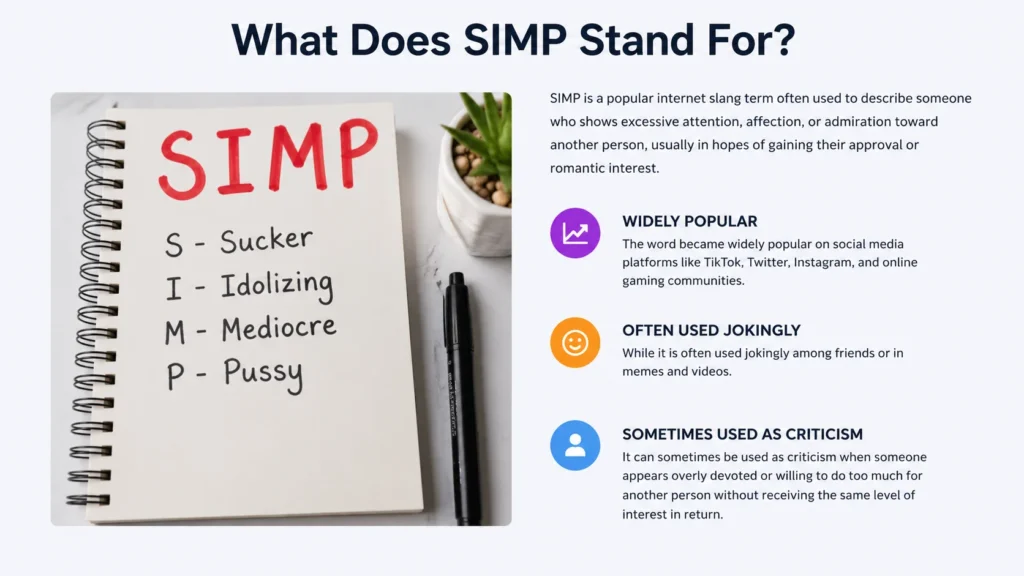
SIMP is a popular internet slang term often used to describe someone who shows excessive attention, affection, or admiration toward another person, usually in hopes of gaining their approval or romantic interest.
The word became widely popular on social media platforms like TikTok, Twitter, Instagram, and online gaming communities. While it is often used jokingly, it can sometimes be used as criticism when someone appears overly devoted or willing to do too much for another person without receiving the same level of interest in return.
The Origin of the Word “Simp”
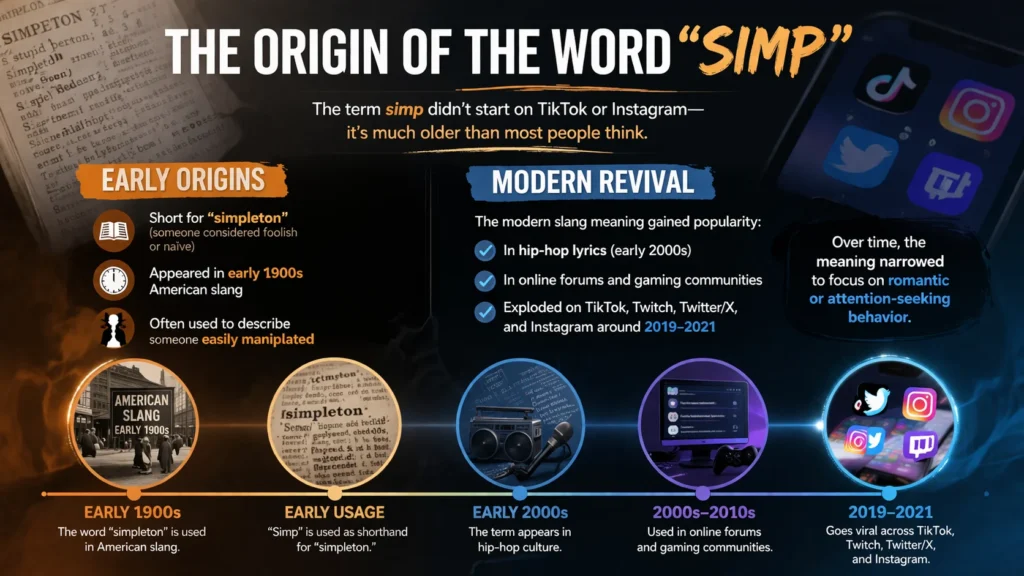
The term simp didn’t start on TikTok or Instagram it’s much older than most people think.
Early Origins
- Short for “simpleton” (someone considered foolish or naïve)
- Appeared in early 1900s American slang
- Often used to describe someone easily manipulated
Modern Revival
The modern slang meaning gained popularity:
- In hip-hop lyrics (early 2000s)
- In online forums and gaming communities
- Exploded on TikTok, Twitch, Twitter/X, and Instagram around 2019–2021
Over time, the meaning narrowed to focus on romantic or attention-seeking behavior.
SIMP Acronym
SIMP Acronym is an internet slang term often used to describe someone who shows excessive attention, affection, or admiration toward another person, usually in hopes of gaining their approval or romantic interest. The term became popular on social media platforms such as TikTok, Instagram, and X (formerly Twitter).
While it is often used jokingly among friends, it can sometimes be used as a criticism depending on the context. Today, SIMP is commonly seen in memes, online discussions, and casual text conversations.
What Being a “Simp” Usually Implies
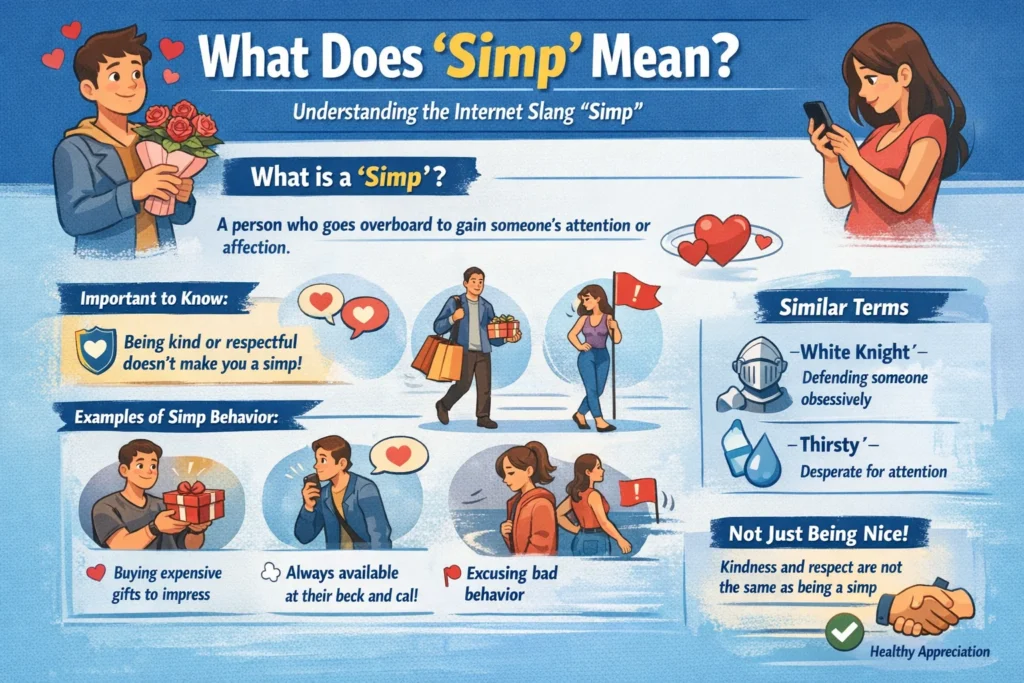
When someone calls another person a simp, they usually mean one or more of the following:
- Over-praising someone who barely notices them
- Doing favors with the hope of romance
- Spending excessive money or time for attention
- Ignoring red flags or disrespect
- Putting someone on a pedestal
⚠️ Important: Being kind or respectful alone does NOT make someone a simp. The term is about imbalance, not kindness.
How “Simp” Is Used in Real Life
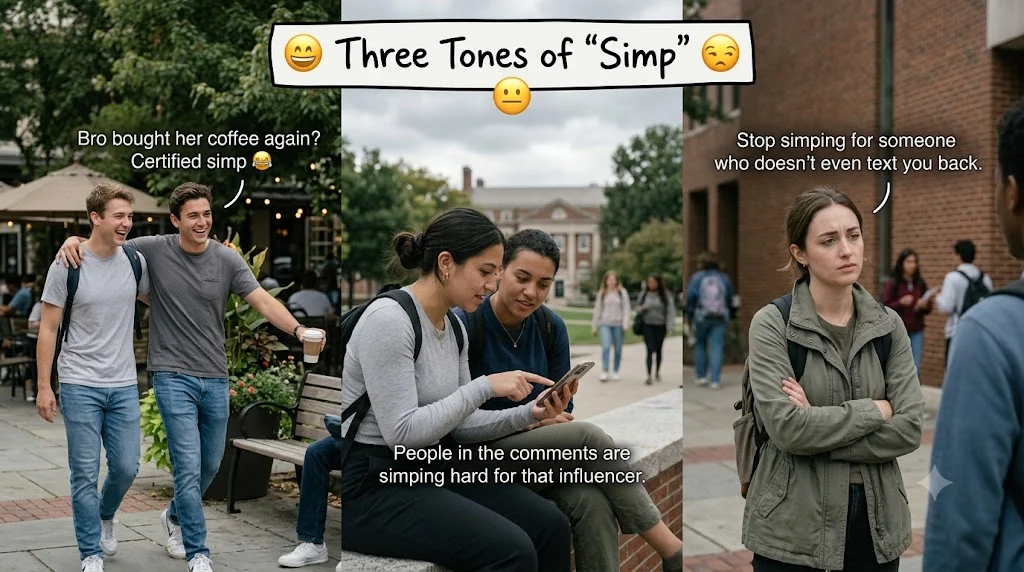
“Simp” can carry different tones depending on context.
1. Playful or Joking Tone 😄
Used among friends or in memes.
Example:
“Bro bought her coffee again? Certified simp 😂”
Meaning: Light teasing, not serious.
2. Neutral or Observational Tone 😐
Used to describe behavior without strong emotion.
Example:
“People in the comments are simping hard for that influencer.”
Meaning: Pointing out excessive admiration.
3. Negative or Dismissive Tone 😒
Used to shame or insult.
Example:
“Stop simping for someone who doesn’t even text you back.”
Meaning: Criticism of one-sided effort.
Common Examples of “Simp” in Context
Here are realistic examples you’ll see online or in conversation:
- “Chat is simping for her again.”
- “He’s not in love he’s just simping.”
- “Why are you defending her so hard? Simp behavior.”
- “It’s okay to like someone, just don’t simp.”
What Is a Simp Man?
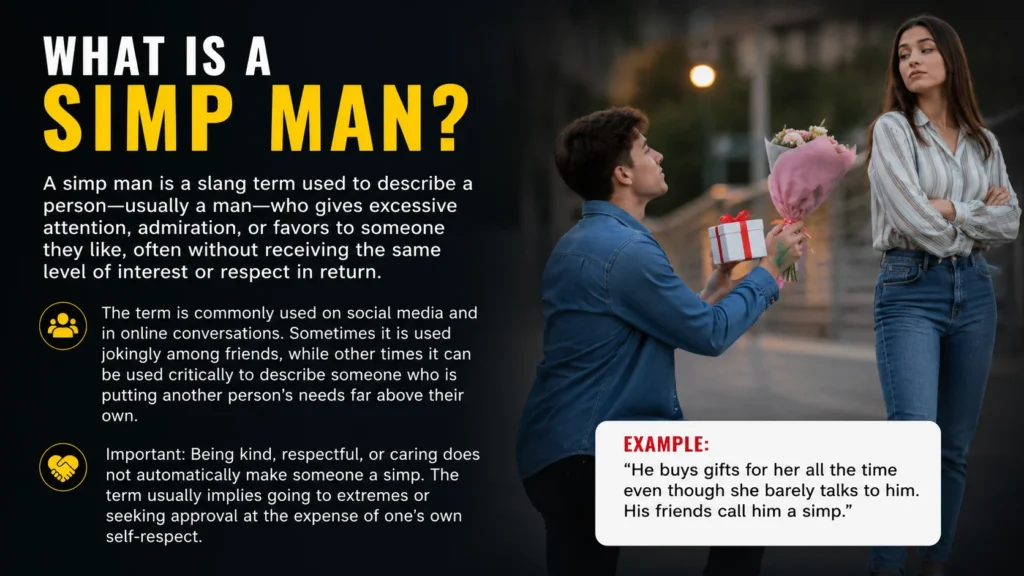
A simp man is a slang term used to describe a person—usually a man—who gives excessive attention, admiration, or favors to someone they like, often without receiving the same level of interest or respect in return.
The term is commonly used on social media and in online conversations. Sometimes it is used jokingly among friends, while other times it can be used critically to describe someone who is putting another person’s needs far above their own.
Example:
“He buys gifts for her all the time even though she barely talks to him. His friends call him a simp.”
Important: Being kind, respectful, or caring does not automatically make someone a simp. The term usually implies going to extremes or seeking approval at the expense of one’s own self-respect.
📊 Example Table: What Counts as Simping vs. What Doesn’t
| Behavior | Is It Simping? | Why |
|---|---|---|
| Being respectful | ❌ No | Respect ≠ obsession |
| Complimenting someone | ❌ No | Normal social behavior |
| Ignoring your needs for them | ✅ Yes | Loss of self-respect |
| Constantly defending them | ✅ Yes | One-sided loyalty |
| Mutual effort & affection | ❌ No | Balanced relationship |
| Spending money for attention | ⚠️ Maybe | Depends on reciprocity |
Is “Simp” Always an Insult?
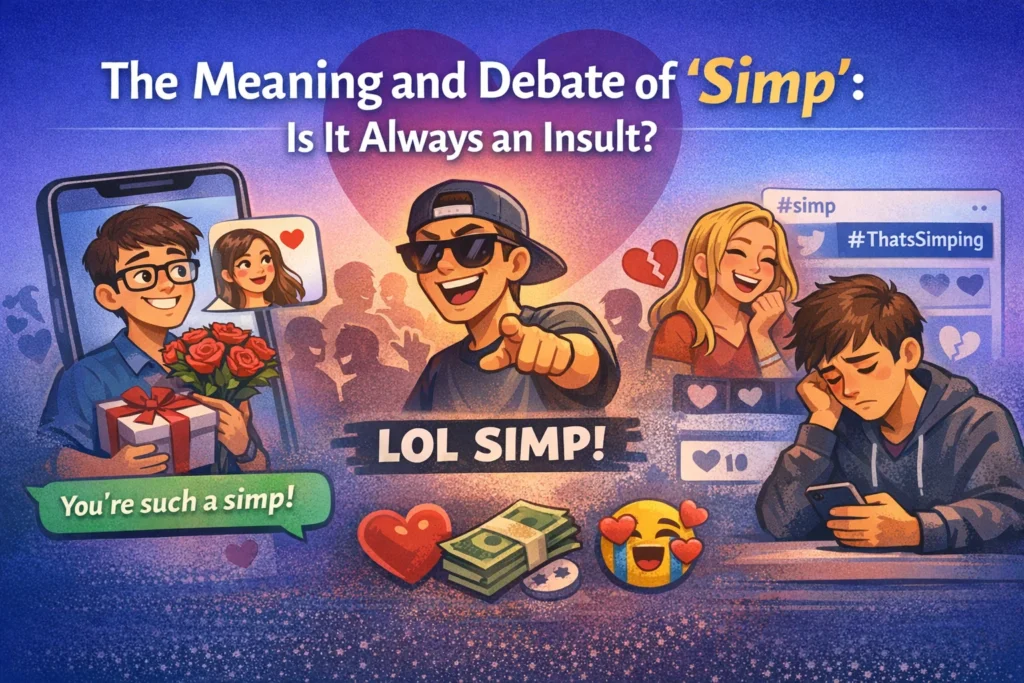
No but it can be.
When It’s NOT an Insult
- Used jokingly
- Used self-referentially (“I’m simping, I know”)
- Used in meme culture
When It IS an Insult
- Used to shame emotional expression
- Used to mock kindness
- Used to discourage healthy relationships
This is why many people criticize the word for discouraging emotional openness, especially in men.
Simp vs Similar Slang Terms
Here’s how simp compares to related slang:
| Term | Meaning | Key Difference |
|---|---|---|
| Simp | Excessive devotion | Often unreciprocated |
| Thirsty | Desperate for attention | More sexual tone |
| Pick-me | Seeks validation | Often self-degrading |
| Hopeless romantic | Idealistic lover | More positive |
| White knight | Defends excessively | Often moral-based |
| Stan | Hardcore fan | Not always romantic |
Alternate Meanings of “Simp”
While rare today, simp can still mean:
- A foolish or naive person
- Someone easily manipulated
However, in modern slang, the romantic/attention-based meaning dominates.
Polite or Professional Alternatives to “Simp”
If you’re in a workplace, academic, or respectful setting, avoid using “simp.” Try these instead:
- Overly devoted
- One-sided effort
- Excessively accommodating
- Unbalanced dynamic
- Putting someone on a pedestal
- Emotionally invested without reciprocity
These communicate the idea without sounding insulting.
When Should You Avoid Using the Word “Simp”?
Avoid using simp when:
- Talking about genuine kindness
- Discussing healthy relationships
- Speaking to someone who may feel attacked
- In professional or formal writing
Misusing the term can make you seem dismissive or immature.
How Social Media Changed the Meaning of “Simp”
Platforms like TikTok and Twitch reshaped the word:
- Used to describe fans donating to creators
- Comment sections label admirers as “simps”
- Became a meme more than a literal insult
In many cases, people now embrace the label ironically.
FAQs:
1. What does simp mean in slang today?
It means someone who shows excessive, often unreciprocated devotion or attention, usually in a romantic context.
2. Is being nice the same as simping?
No. Kindness is normal. Simping involves imbalance and self-sacrifice without return.
3. Can women be simps?
Yes. Anyone can be a simp, though the term is more often applied to men.
4. Is simp a bad word?
It depends on context. It can be playful or insulting.
5. Why do people hate the word simp?
Because it’s sometimes used to shame emotional vulnerability or respectful behavior.
6. What is simping behavior?
Over-prioritizing someone, ignoring self-respect, or chasing attention with no reciprocity.
7. Is simp slang appropriate for kids or school?
It’s casual slang not ideal for formal or educational settings.
8. What’s a better word than simp?
Try “overly devoted,” “one-sided effort,” or “emotionally unbalanced dynamic.”
What “Simp” Really Means
- ✅ Simp means excessive, one-sided devotion
- ❌ It does NOT mean basic kindness or respect
- 🧠 Context and tone matter
- 💬 Often used jokingly online
- ⚠️ Can be insulting if misused
Pro tip: If effort isn’t mutual, it may be simping. If it is mutual, it’s just a relationship.
Conclusion:
The slang word simp reflects modern internet culture but like many slang terms, it’s often misunderstood. Knowing when it’s playful, when it’s harmful, and when it’s just wrong helps you communicate smarter and avoid unnecessary negativity.
Use it carefully or skip it altogether when respect matters more than memes.
Discover More Related Articles:
- Lamentation Mean in the Bible: Why It Matters for Christians in 2026
- Adam Mean in the Bible: Symbolism, and Impact in 2026

Madison Taylor is an experienced content writer who focuses on researching and explaining word meanings, slang, and texting terms. She writes for meanvoro.com, creating clear and accurate to help readers understand language easily.