
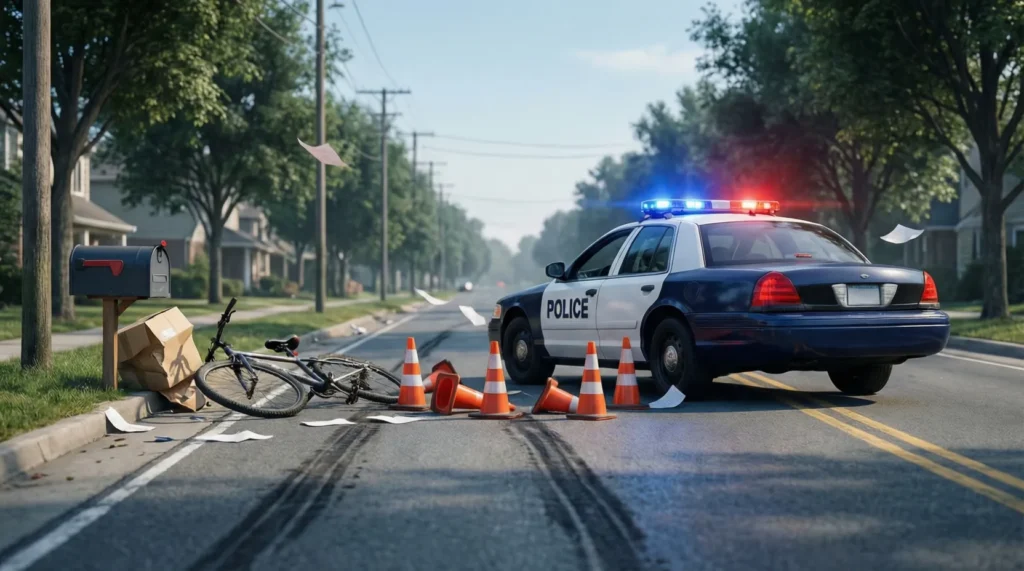
10-50 is a police radio code that refers to a traffic accident or vehicle collision.
It is used to quickly communicate that a crash has occurred. Officers usually provide additional details about injuries, vehicles involved, or road conditions.
10-50 in police code means a traffic accident or vehicle collision. Law enforcement officers use this code during radio communication to report or respond to a crash, whether minor or serious.
Police radio codes can sound confusing if you hear them on scanners, in news reports, or in crime shows. One code that frequently raises questions is 10-50.
In this detailed guide, you will learn exactly what 10-50 means in police code, where it comes from, how it is used in real situations, and how it compares to similar police terms.
Why Police Codes Like 10-50 Are Used
Police officers rely on clear and fast communication, especially during emergencies. Numeric codes help reduce radio traffic and prevent misunderstandings.
Police codes are used to:
- Communicate information quickly
- Keep messages short and clear
- Maintain professionalism on public radio channels
- Reduce confusion during emergencies
The 10-code system allows officers to share critical information efficiently.
Origin of the 10-50 Police Code
History of 10-Codes
The 10-code system was developed in the late 1930s in the United States. It was created to improve clarity and efficiency in police radio communication. Instead of long explanations, officers could use short numeric codes.
Common examples include:
10-4 for acknowledgment
10-20 for location
10-50 for traffic accidents
Why 10-50 Was Chosen
Traffic accidents are among the most common incidents police respond to. Having a specific code for crashes helped officers report these situations quickly and accurately.
What Does 10-50 Mean in Real Police Situations?
In real-world law enforcement, 10-50 refers to any type of vehicle accident, including:
- Minor fender benders
- Multi-vehicle collisions
- Accidents involving property damage
- Crashes with injuries or fatalities, clarified separately
Officers usually follow up the code with details to explain the seriousness of the incident.
Examples
Neutral and Professional Use
“Dispatch, we have a 10-50 at Main Street and Fifth Avenue.”
“Unit responding to a 10-50, two vehicles involved.”
This is the most common usage and is strictly factual.
Urgent or Serious Situations
“Major 10-50, roadway blocked.”
“10-50 with injuries, traffic control needed immediately.”
In these cases, urgency comes from added context rather than the code itself
Example
| Radio Message | Meaning | Situation |
| 10-50 at Elm Street | Traffic accident | Location identified |
| 10-50 no injuries | Minor accident | Property damage only |
| 10-50 with injuries | Serious accident | Medical help needed |
| Major 10-50 road closed | Severe crash | Traffic disruption |
| 10-50 involving pedestrian | High-risk accident | Priority response |
Does 10-50 Mean the Same Everywhere?
Not always. While 10-50 usually means a traffic accident, the exact wording can vary by police department.
Some agencies may say:
Traffic collision
Vehicle crash
Motor vehicle accident
Many modern departments now use plain language instead of numeric codes, especially when working with multiple agencies.
Comparison: 10-50 and Related Police Codes
10-50 vs 10-46
| Code | Meaning |
| 10-50 | Traffic accident |
| 10-46 | Disabled vehicle |
A disabled vehicle does not always involve a collision.
10-50 vs 10-52
| Code | Meaning |
| 10-50 | Accident |
| 10-52 | Ambulance needed |
A 10-52 is often requested after a 10-50 if injuries are reported.
10-50 vs 10-53
| Code | Meaning |
| 10-50 | Traffic accident |
| 10-53 | Road blockage |
Serious accidents often cause road blockages.
Is 10-50 Used Outside Law Enforcement?
Yes, in limited situations.
People who listen to police scanners often hear the term. Movies and television shows also use 10-50 to make dialogue sound realistic, although it may not always be used accurately.
Alternate Meanings of 10-50
In most cases, 10-50 means a traffic accident, but there can be minor regional differences. Outside police communication, it has no widely accepted slang or texting meaning.
Professional Alternatives to 10-50
When police avoid codes, they may use clear language such as:
Traffic collision reported
Motor vehicle accident
Vehicle crash with injuries
Road traffic incident
These terms are easier for the public to understand.
Why Some Departments Avoid the Word “Accident”
Some agencies prefer words like “collision” or “crash” because the word “accident” can suggest that no one is at fault. Despite this shift, 10-50 remains widely recognized.
FAQs
1. What does 10-50 mean in police code?
It means a traffic accident or vehicle collision.
2. Does 10-50 always involve injuries?
No. Injuries are mentioned separately if present.
3. Is 10-50 still used today?
Yes, although some departments now use plain language.
4. What is the difference between 10-50 and 10-46?
10-50 refers to an accident, while 10-46 refers to a disabled vehicle.
5. Can civilians use the term 10-50?
Yes, but it is mainly used by law enforcement.
6. Does 10-50 mean the same in every country?
No. It is mainly used in the United States.
7. What happens after a 10-50 is reported?
Officers respond and assess injuries, vehicles, and traffic conditions.
8. Why do police still use codes like 10-50?
They help keep radio communication quick and efficient.
Conclusion
Understanding what 10-50 means in police code makes it easier to interpret police communication and scanner traffic. The code simply refers to a traffic accident, but the seriousness depends on additional details.
while many agencies are moving toward plain language, 10-50 remains one of the most commonly recognized police radio codes.
Search More Related Articles :

Ryan Thompson is an experienced content writer specializing in slang terms, texting abbreviations, and word meanings. He writes for meanvoro.com, where he creates accurate and easy-to-understand language content for readers.