
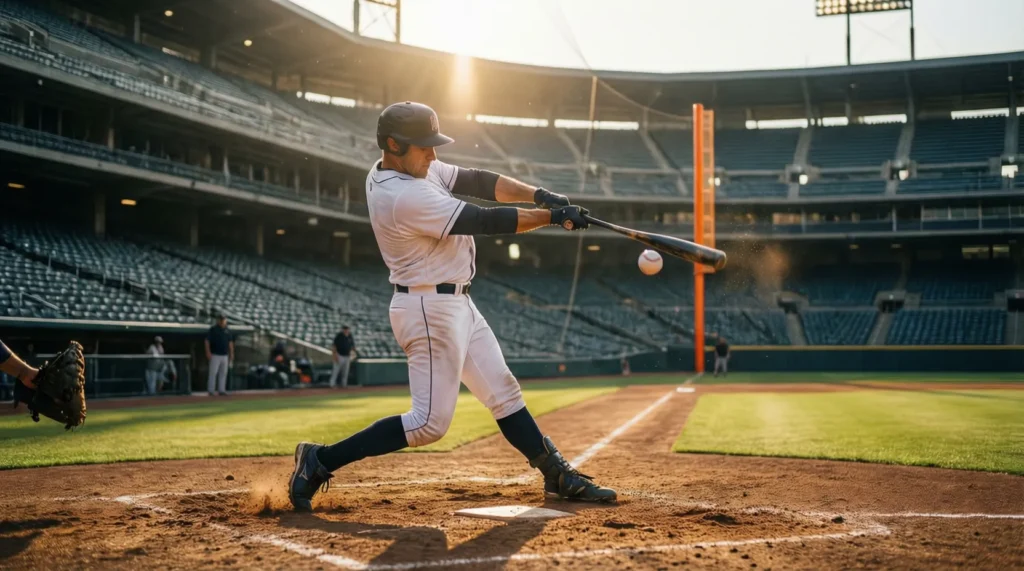
In baseball, BP stands for Batting Practice. It refers to a training session where hitters practice hitting pitched balls before games or during team workouts to improve timing, mechanics, and confidence.
If you’ve ever watched a baseball game early or listened to commentators talk before first pitch, you’ve probably heard the term BP. It’s one of the most commonly used abbreviations in baseball, yet many casual fans and beginners aren’t always sure what it means.
This article explains exactly what BP means in baseball, why it matters, how it’s used at different levels, and how players, coaches, and fans talk about it in real life.
Why BP Is Important in Baseball
Batting practice is more than just a warm-up. It is a core part of player preparation and development at every level of the game.
BP helps players:
- Improve swing mechanics
- Build muscle memory
- Gain confidence at the plate
- Prepare mentally for game situations
For fans, BP offers an inside look at players’ skills, personalities, and raw power before the game begins.
Origin and History of BP in Baseball
Batting practice has been part of baseball since the sport’s early days in the 1800s. Early players practiced hitting using informal tosses from teammates. As baseball became more organized, structured batting practice became standard.
Over time:
- Coaches began pitching BP
- Pre-game routines became standardized
- The abbreviation “BP” became common shorthand
Today, BP is a universal term understood across all levels of baseball.
What Happens During Batting Practice?
Batting practice follows a structured routine, although details vary by team and level.
Common elements include:
- A coach or pitcher throwing controlled pitches
- Hitters focusing on contact, power, or placement
- Fielders practicing catching and throwing live balls
- Catchers working on receiving and footwork
Types of Batting Practice
Traditional BP
This is the most common form. A coach throws consistent pitches so hitters can focus on timing and mechanics.
Live BP
Real pitchers throw at near game speed. This is often used at higher levels for more realistic preparation.
Soft Toss BP
Short-distance tosses from the side or front, designed to improve hand-eye coordination.
Tee Work
The ball is placed on a tee. This helps hitters refine swing mechanics and consistency, especially at younger levels.
How BP Is Used at Different Levels of Baseball
Youth and Amateur Baseball
- Teaching fundamentals
- Building confidence
- Developing proper form
High School and College Baseball
- Evaluating player readiness
- Refining advanced hitting approaches
- Simulating situational hitting
Professional Baseball
- Fine-tuning timing
- Studying swing paths and ball flight
- Entertaining fans during open practice sessions
Examples
Friendly or Casual Tone
- “He was crushing the ball during BP today.”
- “Let’s get there early and watch BP.”
Neutral or Informative Tone
- “The team will take BP before the game.”
- “He adjusted his swing during BP.”
Slightly Negative or Dismissive Tone
- “BP power doesn’t always translate to games.”
- “It’s just BP, not live pitching.”
Example
| Situation | Example Sentence | Meaning |
| Practice schedule | “BP starts at 4 PM.” | Batting practice time |
| Commentary | “He looked great in BP.” | Strong practice performance |
| Evaluation | “BP showed improvement.” | Skill development |
| Criticism | “That’s BP power.” | Downplaying results |
BP Compared With Related Baseball Terms
Training vs Live Hitting
BP uses controlled pitches, while live hitting involves real pitchers throwing competitive pitches.
Drills vs Scrimmage
BP focuses on hitting repetition. A scrimmage simulates full game conditions.
Preparation vs Warm-Ups
Preparation is structured and skill-focused, while warm-ups are lighter activities meant to prepare players physically.
Alternate Meanings of BP
Outside of baseball, BP can mean different things depending on context.
| Context | Meaning |
| Medical | Blood pressure |
| Business | Business partner |
| Energy | British Petroleum |
| Design | Blueprint |
In baseball discussions, BP almost always means Batting Practice.
Professional Alternatives to Saying BP
In formal or written communication, you may see:
- Batting practice
- Pre-game hitting session
- Hitting practice
These terms are often used in coaching documents or sports journalism.
Why Fans Enjoy Batting Practice
Fans love BP because:
- Players are relaxed and interactive
- Home runs are frequent
- It offers great photo opportunities
- It provides insight into preparation routines
Many fans arrive early specifically to watch BP.
Common Myths About BP
- Strong BP performance guarantees game success
- BP is only for hitters
- Professional players don’t need BP
In reality, BP is helpful but not a perfect predictor of game performance, and even elite players rely on it.
FAQs
What does BP mean in baseball?
BP stands for Batting Practice.
Is BP the same as a real game?
No. BP uses controlled pitching without game pressure.
Do MLB players still take BP?
Yes, although some veterans may skip it occasionally for rest.
Can fans watch batting practice?
Many stadiums allow fans to watch if they arrive early.
Why do players hit so many home runs in BP?
Pitches are more predictable and easier to hit than in games.
Is BP only done before games?
No. Teams also use BP during regular practices.
What is live BP?
Live BP involves real pitchers throwing near game speed.
Does BP actually improve hitting?
Yes. It improves timing, confidence, and consistency.
Conclusion
BP in baseball means Batting Practice, a vital part of preparation and skill development. It helps players refine their swings, build confidence, and get ready for competition.
For fans, BP offers an exciting and educational look at the game before it begins. Whether you’re watching from the stands or hearing the term on a broadcast, knowing what BP means adds depth to your understanding of baseball.
Search More Related Articles :
- Hashtag Meaning in Social Media Marketing: How Brands Use (2026)
- VOC Paint Meaning: Low-VOC vs Traditional Paints Compared (2026)

Ryan Thompson is an experienced content writer specializing in slang terms, texting abbreviations, and word meanings. He writes for meanvoro.com, where he creates accurate and easy-to-understand language content for readers.