Definition:
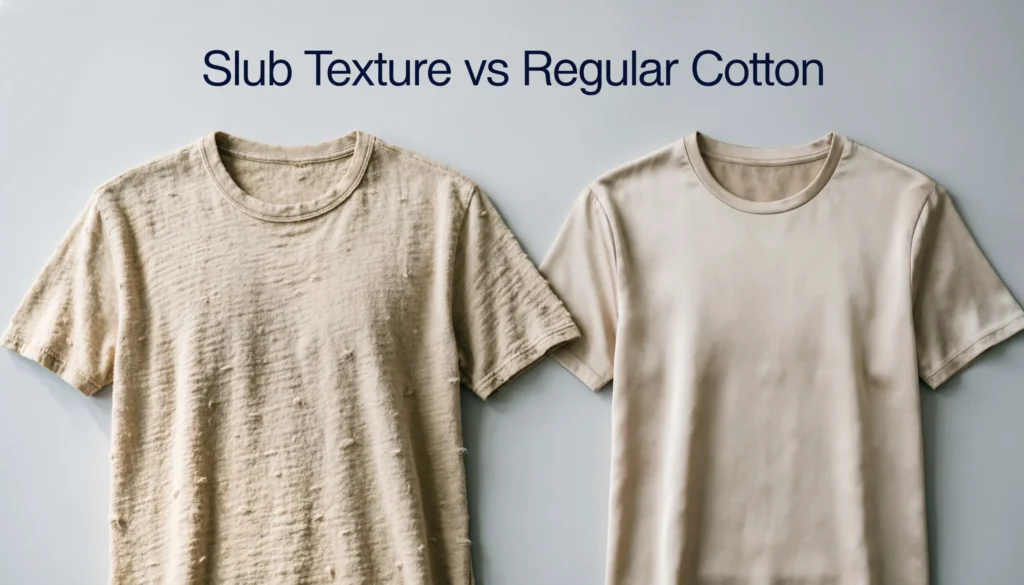
Slub in clothing refers to a type of fabric texture created by irregular, slightly thicker strands of yarn woven into the material. These intentional variations give the fabric a natural, textured, and slightly uneven appearance.
If you’ve ever seen a T-shirt labeled “slub cotton” and wondered what that actually means, you’re not alone. The word slub often appears in product descriptions, especially for casual wear, but many shoppers are unsure whether it refers to quality, style, or fabric type.
In this guide, we’ll break down what slub means in clothing, how it’s made, why it’s popular, and whether it’s right for your wardrobe.
Origin of the Term “Slub”
The word slub comes from the textile industry. Traditionally, it referred to a thick spot or knot in yarn that occurred during the spinning process.
Originally:
- Slubs were considered imperfections.
- They happened accidentally during yarn production.
Over time, however, textile manufacturers began creating slubs intentionally to add character and texture to fabric.
Today, slub is no longer seen as a flaw. It is a design feature.
What Is Slub Fabric?
Slub fabric is made using yarn that varies in thickness. Instead of being perfectly smooth and even, the yarn includes:
- Slightly thicker sections
- Thin, smooth areas
- Subtle irregularities
These variations create a textured, organic look once the fabric is woven or knitted.
Visual Characteristics of Slub Fabric
- Slight horizontal lines
- Tiny bumps or texture differences
- Soft, lightweight feel
- Casual and relaxed appearance
Most commonly, you’ll see slub cotton, but other materials can also be made with a slub texture.
How Slub Fabric Is Made
The process involves:
- Spinning yarn with intentional thickness variations.
- Weaving or knitting that yarn into fabric.
- Finishing the fabric to enhance softness and drape.
Unlike traditional smooth yarn, slub yarn is engineered to create a textured effect without compromising comfort.
Why Is Slub Popular in Clothing?
Slub fabric has become especially popular in casual fashion because it offers:
- A relaxed, laid-back aesthetic
- A lightweight, breathable feel
- A slightly vintage or worn-in look
- More visual interest than plain cotton
Many brands use slub cotton in:
- T-shirts
- Henleys
- Tank tops
- Lightweight sweaters
- Summer dresses
Slub fabric gives simple garments more personality.
Examples of Slub in Clothing
Here’s how slub shows up in real-life apparel:
| Clothing Item | Description | Why Slub Works |
|---|---|---|
| Slub Cotton T-Shirt | Slightly textured surface | Adds visual depth to basic tees |
| Slub Tank Top | Lightweight, breathable | Ideal for warm weather |
| Slub Henley Shirt | Textured knit with buttons | Casual yet stylish look |
| Slub Knit Dress | Soft drape with subtle texture | Relaxed and comfortable |
| Slub Sweater | Light texture throughout | Adds dimension to layering |
You may not immediately notice slub unless you look closely, but it creates a subtle design detail.
Is Slub Fabric Good Quality?
Many shoppers worry that slub looks uneven or defective.
The truth is:
- Slub texture is intentional.
- It does not mean poor quality.
- High-quality brands often use slub for style and comfort.
However, slub fabric is generally:
- Thinner than standard cotton
- Slightly more delicate
- More prone to stretching over time
It is best suited for casual wear rather than structured garments.
Slub vs Regular Cotton: What’s the Difference?
| Feature | Slub Cotton | Regular Cotton |
|---|---|---|
| Texture | Slightly uneven | Smooth |
| Appearance | Textured and casual | Clean and uniform |
| Feel | Soft and lightweight | Varies |
| Style | Relaxed and vintage-inspired | Classic and polished |
| Breathability | High | High |
If you prefer minimal and polished looks, regular cotton may be better. If you like relaxed and slightly textured clothing, slub is a great option.
Common Types of Slub Fabric
While cotton slub is the most popular, you may also find:
- Slub jersey
- Slub knit
- Slub linen
- Slub blends (cotton-polyester mix)
Each variation keeps the signature textured appearance while offering different durability and stretch levels.
Alternate Meanings of “Slub”
Outside of clothing, the term slub can refer to:
- A thick knot or uneven section in yarn
- Textile manufacturing terminology
In modern fashion, however, it almost always refers to fabric texture.
Is Slub Fabric Comfortable?
Yes. In fact, comfort is one of its main selling points.
Slub clothing is typically:
- Soft
- Breathable
- Lightweight
- Ideal for layering
Because it is often thinner than standard cotton, it feels cool and airy, making it popular for summer fashion.
Care Tips for Slub Clothing
Since slub fabrics can be delicate, consider:
- Washing in cold water
- Using gentle cycles
- Avoiding high heat drying
- Air drying when possible
Proper care helps preserve the texture and prevent stretching.
FAQs
- What does slub mean on a clothing label?
It means the fabric has a textured appearance created by uneven yarn thickness. - Is slub fabric see-through?
Some slub fabrics are lightweight and may be slightly sheer, depending on thickness. - Is slub better than regular cotton?
It depends on preference. Slub offers texture and a casual look, while regular cotton is smoother. - Does slub shrink?
Like most cotton fabrics, it may shrink slightly if washed in hot water. - Why does slub fabric look uneven?
The uneven texture is intentional and part of its design. - Is slub fabric durable?
It is durable for casual wear but may be thinner than standard cotton. - Is slub fabric good for summer?
Yes, it is breathable and lightweight. - Is slub considered premium?
Many brands use slub for a stylish, elevated casual look.
Practical Tips for Shopping Slub Clothing
- Check fabric thickness before buying.
- Look at close-up photos to see the texture.
- Choose neutral colors for versatile styling.
- Consider layering if the fabric is thin.
- Wash carefully to maintain shape.
Conclusion
Slub in clothing refers to a textured fabric created by intentionally uneven yarn thickness. What was once considered a flaw is now a fashionable feature. Slub fabric offers breathability, softness, and a relaxed aesthetic that works especially well in casual wear.
If you’re looking for clothing with subtle texture and a comfortable feel, slub fabric is a stylish and practical choice.
Discover More Related Articles:
- Lamentation Mean in the Bible: Why It Matters for Christians in 2026
- Adam Mean in the Bible: Symbolism, and Impact in 2026

Ryan Thompson is an experienced content writer specializing in slang terms, texting abbreviations, and word meanings. He writes for meanvoro.com, where he creates accurate and easy-to-understand language content for readers.